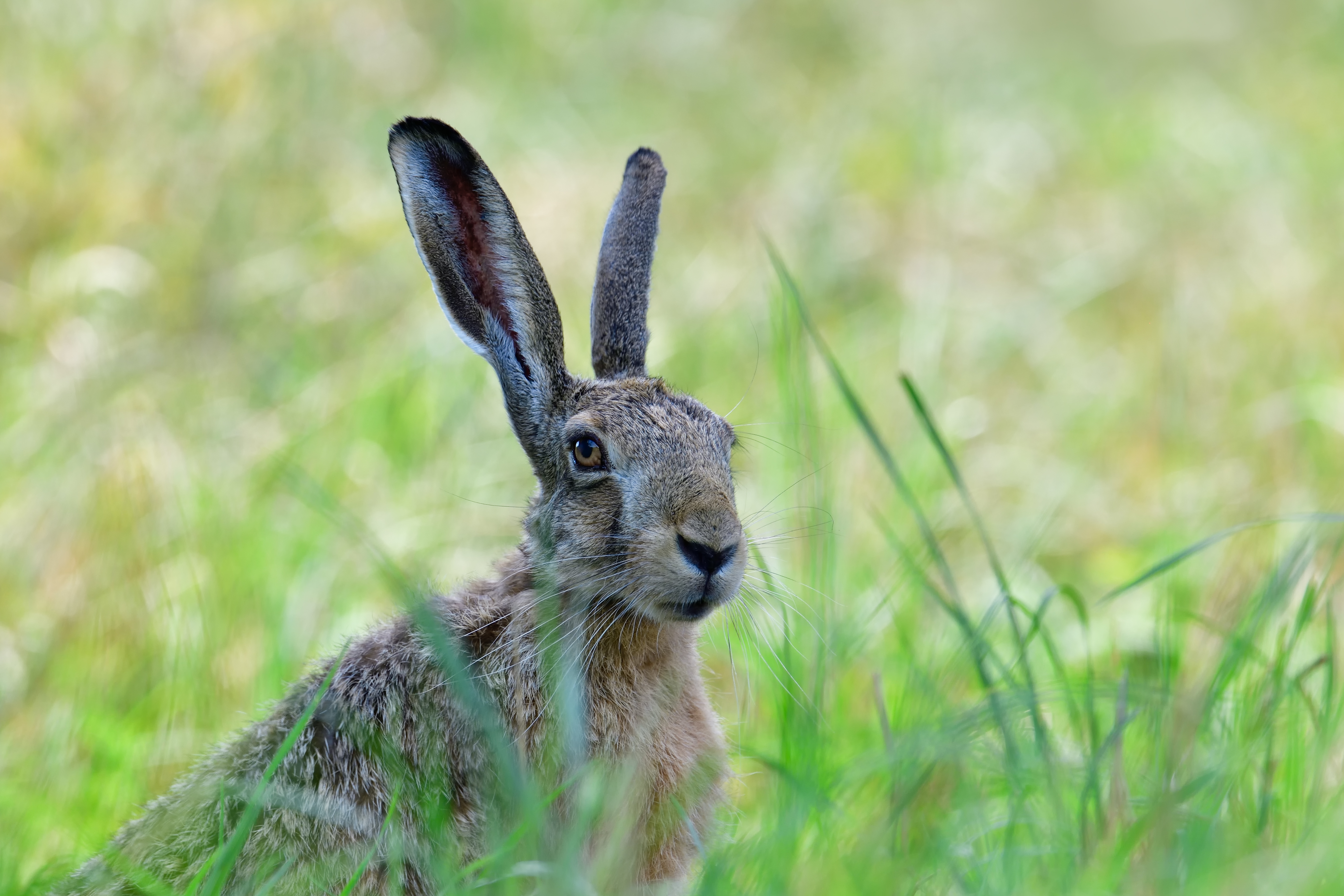
It is not something that was ever a plan, but for quite a long time now I seem to have had a sideline in challenging famous people who express silly views. Politicians obviously and also aging rock guitarists and BBC presenters. Thankfully the great David Attenborough has never said anything to be worthy of criticism, but this week I felt quite close to that when I found myself in violent disagreement with Michael Morpurgo. The author of War Horse and dozens of other wonderful books has been doing the rounds on social media in a video supporting the introduction of a close season for hares. In a meeting in parliament, he supported legislation to restrict shooting hares and said that “I have seen about one hare in 30 years” and that the “next generation won’t be able to see a hare ever”.
Now I do not bow in my love for the hare to anyone, not even Michael Morpurgo, but I am afraid he is talking utter nonsense in suggesting that hares are declining towards extinction or indeed that a close season would do anything to increase the population. As far as hare numbers are concerned despite some disingenuous suggestions to the contrary the brown hare is a modern conservation success story helped by the implementation of a brown hare Biodiversity Action Plan in the 1990s. Data suggests that a reduction in the hare population through the middle of the 20th Century was first stabilised and has subsequently been reversed in recent decades. The British Trust for Ornithology’s annual survey shows an increase of a third since 1995 and that trend is supported by the GWCT gamebag census. Meanwhile, there is absolutely no evidence that any significant number of hares are culled outside the period when they can currently be sold to game dealers from 1st September to 1st March.
So why has Michael Morpurgo only seen one hare in 30 years? The clue is in where he lives; a village called Iddesleigh in Mid Devon. I once farmed a few villages over and drank in the local pub long before it became a War Horse tourist destination. Iddesleigh is beef, sheep and dairy country. There is not much arable and a lot of grass much of which is turned into silage. If there is one thing that supresses the hare population it is silaging. Hares are so uncommon in the area that before the Hunting Act we used to long net hares on an estate in Hampshire and release them on areas of moorland to try to establish populations in an operation organised by the local beagle pack. I never heard of anyone shooting a hare, even if they could find one to shoot, but I do know that few leverets could ever have survived the three or four cuts of grass a year required to maximise grass production on the silage fields. On the other hand, Morpurgo was born in Hertfordshire, where I have lived for the last 25 years, and were he to head back to the county of his birth he would have no problem at all seeing all the hares he wanted to. We have so many that they create a crime wave by attracting poachers who respect neither the hare, nor private property.
The campaign for a close season that Morpurgo is supporting has been rattling around in parliament for years and has recently been given oxygen by a book written by a political advisor about raising a leveret during lockdown. The book is wonderful, reminiscent in some ways of TH White’s famous book The Goshawk, but that does not any way justify legislation. There is not a jot of evidence that a close season would increase the hare population or improve hare welfare. Sadly, it would simply be an exercise in virtue signalling which would use up parliamentary time that could be used for many more practical purposes.
Given the multiple challenges facing wildlife and the countryside it should be incumbent on all of us to focus our efforts on legislation which would actually benefit nature. Far too many campaigns relating to wildlife are about human egos rather than the welfare of animals.

 15 July, 2025