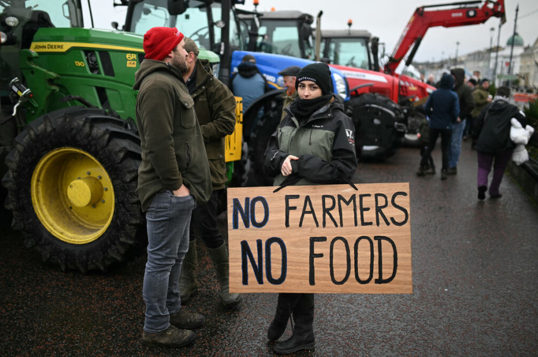
Not a single farmer is planning to vote for Labour at the next election. That is the headline from a poll of 500 members carried out by our colleagues at the Country Land and Business Association (CLA). There are immediate caveats to the findings. For instance, would a survey of members of the Tenant Farmers’ Association have come up with the same result? The 0% figure is, however, a stark reminder of how low Labour’s stock has fallen within at least a section of the farming community.
There is no figure from before the last election for comparison, but the assumption is that the support that Labour did have amongst farmers was lost with the announcement that inheritance tax would be applied to agricultural property. The political beneficiaries are the Conservatives who poll 38% of farmers and Reform who pick up 36%.
There will be those in Labour who believe that this does not matter as farmers are electorally irrelevant. After all, there are only around 300,000 farmers, directors and spouses in the UK who are spread across hundreds of parliamentary constituencies. Even in the most rural of seats they will only ever make up a small proportion of voters so it is possible to argue that the farming vote is insignificant, especially as there may be an assumption amongst Labour strategists that the majority were not in any way their natural supporters. That, however, would be to misunderstand the totemic status of farming and the countryside amongst a much wider proportion of the electorate.
In the same way that there are not many more than 10,000 fishermen in the UK yet they had a seismic impact on the Brexit referendum, farmers have a political influence that goes way beyond their proportion of the electorate. The countryside is central to many people’s understanding of Britishness and the farmers who look after that countryside are therefore significant political influencers.
Whatever the findings of this snapshot poll, the government still has until 2029 until it needs to call another general election. Labour has plenty of time to change views within the farming community, not least by changing its approach to inheritance tax, and also to focus on delivering for the wider rural community to mitigate any electoral damage within the farming world.
A new group of Labour MPs – the Labour Rural Research Group – has been formed ‘to ensure that Labour policy reflects the specific challenges and opportunities of life in our countryside and rural areas’. Its initial report focusses on identifying the priorities of rural voters and gratifyingly does not suggest that Labour should get involved in the sort of culture war politics that some, more urban, Labour MPs identify with rural policy. Instead, the report concludes that rural voters have very much the same priorities as their urban counterparts – healthcare, jobs, the cost of living, the environment – but they believe that rural areas need to be recognised as distinctive by the Government if these challenges are to be met.
Over three-quarters (82.7%) of rural voters see the need for a rural strategy to tackle the simultaneous challenges of delivering public services across vast geographical areas, addressing skills gaps, and creating lifelong opportunities for rural dwellers. It will be interesting to see what influence this group, which currently numbers 26 MPs, has on government policy. If Labour is to rise from its current position in the polls it will need to listen to its rural MPs as well as the rural electorate.

 28 August, 2025