
 12 February, 2026


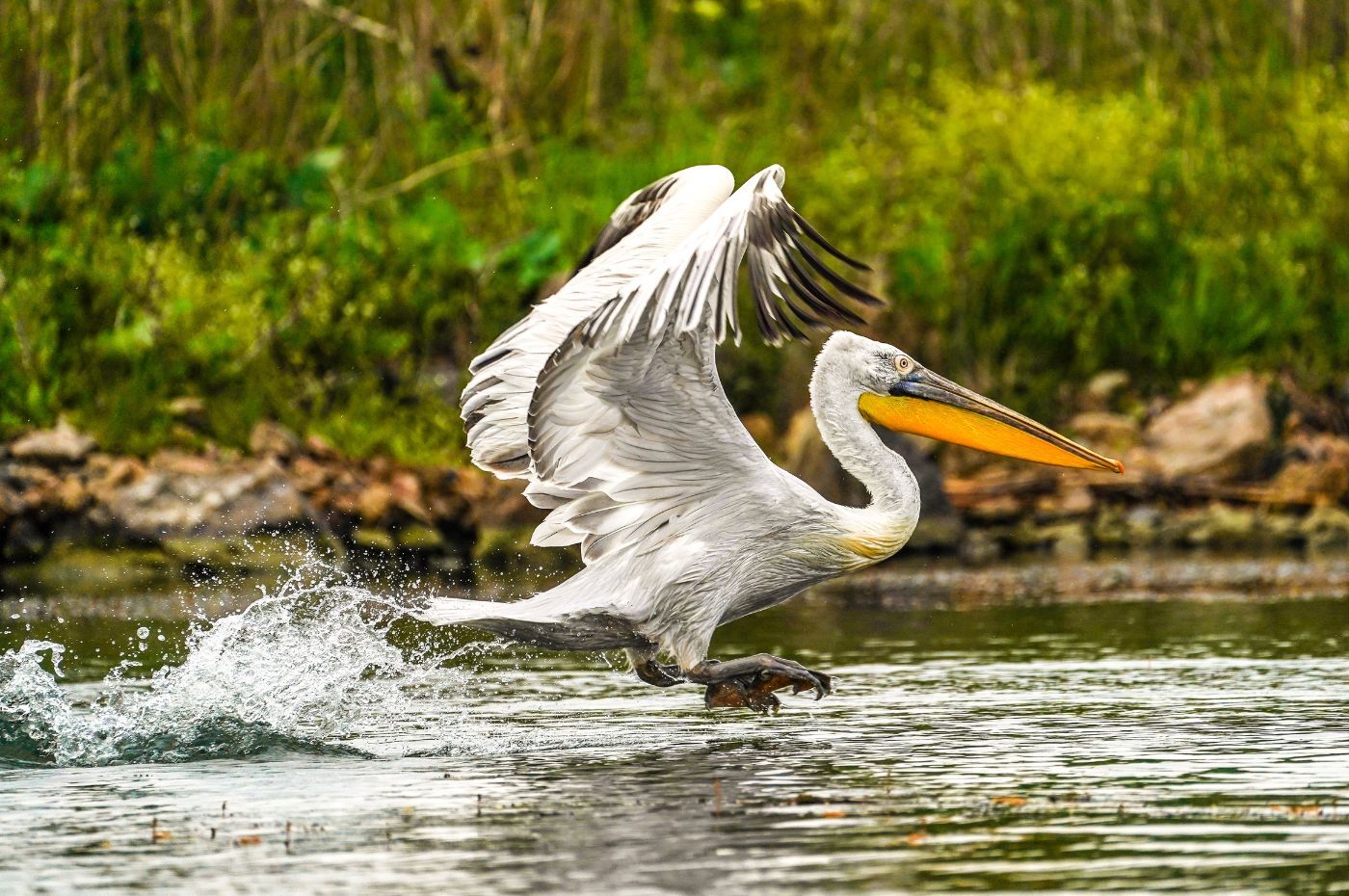
The Dalmatian pelican is not a species with which I am personally acquainted, which is not particularly surprising when the last people to see them in Britain were inhabitants of the Roman Empire. If you want to see the species now you would also have to travel some distance to Greece, the Eastern Mediterranean, Central Asia or the Indian subcontinent.
Apparently, however, their reintroduction to the UK “would encourage the large-scale restoration and protection of wetland habitats”. It is unclear exactly how the pelicans would go about restoring habitats, but a brief bit of research reveals that they are very big. Indeed, with a 10ft wingspan they are amongst the largest birds that fly.
It is not particularly surprising, therefore, that the Dalmatian pelican has become the latest fad of the rewilding movement as there is nothing a rewilder likes more than a big animal, known in the trade as ‘charismatic megafauna’. The media reported last week that a conservation company called Restore was assessing whether the Dalmatian pelican could be reintroduced to Britain and carried quotes from its founder and director, Benedict MacDonald.
Now for those of us who have been following the rewilding bandwagon this is a little odd because a few years ago MacDonald, who describes himself as a “professional rewilder”, launched another company called Real Wildlife Estates (RWE) with some fanfare. He claimed it would “help investors exploit new and predicted income streams such as carbon credits, the woodland carbon and peatland codes, money from new farming subsidies and biodiversity net gain to deliver a healthy return on their capital investment”. This model brought criticism both from environmentalists who were suspicious of the emphasis on financial benefit and from local people who objected to the idea that the future of their landscapes and communities would be dictated by rewilding for profit.
It was claimed that RWE was backed by a 50 million Euro investment fund set up by the French cosmetics company L’Oreal. However, in the five years since it was launched, RWE has been totally anonymous and, according to Companies House, is currently in liquidation.
So, to Benedict MacDonald’s new company, Restore, which has just rebranded with a logo incorporating, you guessed it, a Dalmatian pelican which it says reflects “the financial confidence, and ambition, of a natural capital venture taking off”. Just like his last operation, Restore puts plenty of emphasis on returns and says it “was founded on the belief that nature recovery should be a mainstream land use and investment strategy”. The Dalmatian pelican might not lay golden eggs, but it has provided lots of media coverage and the assumption has to be that its value to Restore relates much more to PR than as a tool for ecological restoration.
There are plenty of landowners delivering important nature restoration under the label of rewilding, but as I have written before, there are also plenty of people selling snake oil and scams using the brand. Interestingly the Reform party also signalled its concerns about rewilding this week by distancing itself from arch advocate Ben Goldsmith.
As ever, the concern is that all the talk of reintroducing random species and generating profit for corporate investors from land use change distracts from the real and present issues in the countryside. I was lucky enough to be at the Purdey conservation awards on Tuesday night where three exceptional shoots were honoured for their conservation efforts. Lord (Matt) Ridley’s East Carnigill won the Gold Award particularly for work on the endangered black grouse, which has been so successful that individuals are now being provided for reintroduction in other areas of England.
This is real nature restoration and as our own trustee, Julian Metherell, whose Kingston Wood Farm won the Bronze Award, said: “Too rarely we celebrate the extraordinary work that the men and women on our shoots do 365 days a year to support the most wonderful biodiversity and habitat creation – which does so much good for the countryside beyond shooting.”