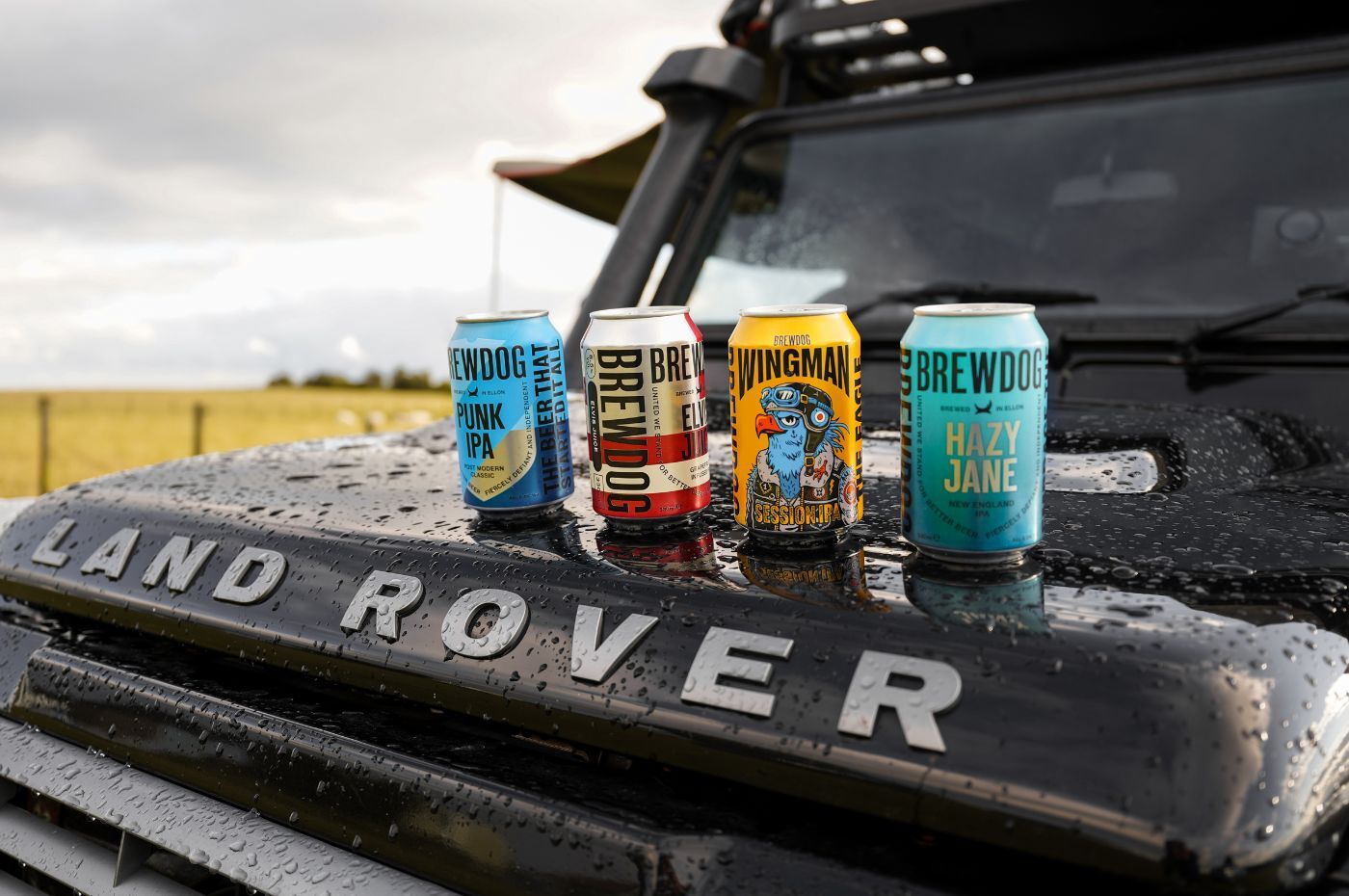
For those who have not previously come across it, Brewdog is the maker of vaguely decent beers made undrinkable by the vast amounts of sanctimonious twaddle that accompany them. The marketing model for Brewdog’s ‘Punk Beer’ is based on controversy and conflict which served it well as sales grew and it became one of the biggest beer brands in Britain.
At the peak of its growth in 2021, founder James Watt announced the purchase of the 9,300 acre Kinrara Estate in the Cairngorms for £8.8m, claiming that Brewdog was going to plant “the biggest ever” forest in Scotland to help regenerate ancient woodlands which would stretch over a “staggering” 19 sq. miles and involve millions of trees. Watt bizarrely said that this ‘Lost Forest’ would be bigger than “17 actual countries” and claimed that the forest would be “capable of sequestering up to 550,000 tonnes of CO2 each year”.
To facilitate this Brewdog reportedly sacked the six gamekeepers who lived and worked on the estate and set about a tree planting operation with £2.7m funding from the Scottish Government. Its methods raised concerns across nearly every part of the land management sector and it was therefore no surprise that over 50% of the trees that were planted in the ‘Lost Forest’ died leaving Brewdog with a significant liability.
Meanwhile, Brewdog’s popularity has not just been waning in the Highlands. Its beer has been dropped by 2,000 pubs and with losses mounting it has been unloading assets. This week it announced the sale of Kinrara to ‘natural capital asset manager’ Oxygen Conservation. The price Oxygen Conservation has paid is undisclosed but, given the current run on Scottish land, it would be no surprise if Brewdog has turned an undeserved profit on an estate where it has done nothing but serious damage in its short time as custodian. Time will tell whether Oxygen Conservation shows more concern for the estate and the local community, but giving its stated aim is to build a £1 billion land portfolio and off load it by 2030 that seems far from certain.
Kinrara is a model of how the highlands should not be managed and the irony is that in its desperation to move away from the traditional highland sporting estate, the Scottish land reform lobby has enabled this sort of exploitation. There might be disagreements between traditional estate owners and environmentalists about how upland Scotland is managed, but few doubt that both groups have a real and deep commitment to the land. That certainly cannot be said for Brewdog who simply used Kinrara and those who worked there as pawns in its marketing game. Nor is there any evidence that the plethora of natural capital companies springing up at the smell of money in the hills have any more of a long-term commitment to the land or its people.
There is plenty of middle ground shared by enlightened sporting estate owners and pragmatic environmental organisations, indeed, in many parts of the Highlands such landowners cooperate extremely successfully. That is the model for the future of the Highlands, not beer salesmen, asset strippers and those in search of a quick dollar.

 09 October, 2025


.png)