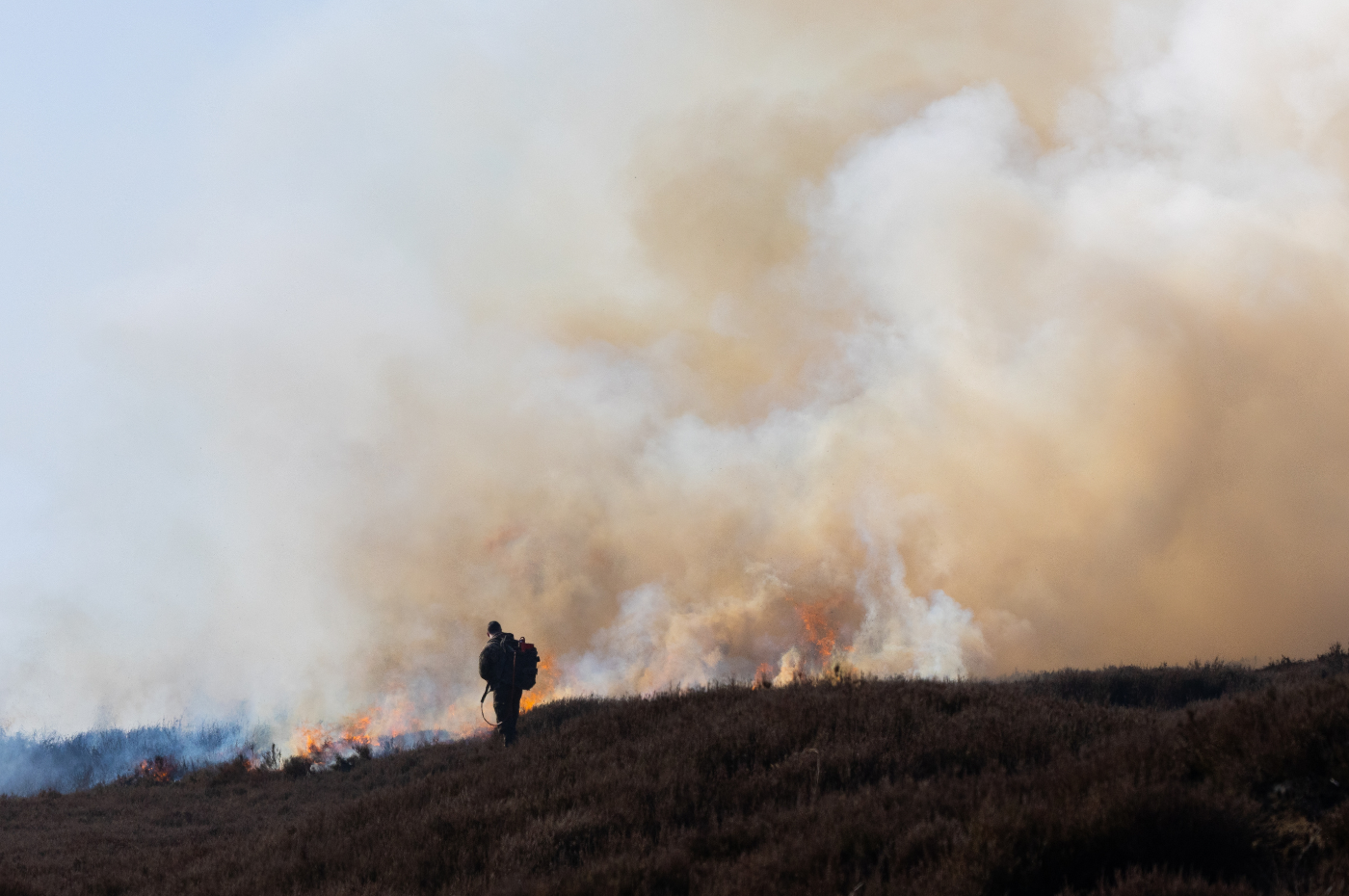
The government must reassess the impact of restrictions on controlled heather burning as part of a more effective approach to wildfire prevention, the House of Commons Environment, Food and Rural Affairs (EFRA) Committee has recommended.
In its report, A burning issue: managing wildfire risk, published today (21 October), the Committee raises “significant concern” about the implications of the government’s approach to moorland management. In doing so it backs longstanding arguments made by the Countryside Alliance, echoed by the Future Landscapes Forum, about the importance of reducing fuel loads to mitigate wildfire risk.
The report casts doubt on whether the government had adequately assessed the likely impact on wildfire resilience before making the Heather and Grass etc. Burning (England) (Amendment) Regulations 2025, which more than trebled the area subject to restrictions on controlled burning by lowering the relevant peat-depth threshold from 40cm to 30cm.
The Committee requests the government, in responding to the report, to set out what assessment it undertook before making that decision, recommending that if none was undertaken before the regulations were introduced, it should commission and publish one within three months. The report also calls for the regulations to be reviewed once the findings of the IDEAL UK Fire research programme become available, with the government prepared to reconsider its approach in light of new scientific evidence.
The report recognises that restricting controlled burning can limit land managers’ ability to reduce fuel loads, while also risking the loss of the practical skills and experience needed to tackle wildfires. It notes concerns that national restrictions do not adequately account for differences in local conditions and that the licensing system has proved difficult to navigate. Of 24 licence applications submitted in the preceding 12 months, just two had been granted.
Quite reasonably, the Committee eschews a one-size-fits-all approach to land management. While recognising the long-term benefits of peatland restoration and rewetting, it stresses that these can take years or even decades to be fully delivered, and cannot alone address the immediate challenge of managing hazardous fuel loads.
Instead, the Committee calls for a “toolbox” approach, combining appropriate methods including prescribed burning, cutting, grazing and rewetting according to local circumstances. It recommends that the government set out how all available methods will be supported over the next one to two years, alongside longer-term restoration ambitions.
The report also highlights the need to rebuild trust between policymakers, regulators and land managers, recommending a stakeholder roundtable involving Defra, Natural England and moorland managers affected by burning restrictions.
The Countryside Alliance has consistently argued that the responsible controlled burning of heather as undertaken by gamekeepers plays an important role in reducing fuel loads and helping prevent wildfires. The Committee’s findings reinforce the need for wildfire risk to be given proper weight in land management policy, rather than allowing restrictions designed to achieve other environmental objectives to be imposed without fully considering their consequences.
The Alliance will continue to press for an evidence-based, locally responsive approach that recognises the contribution of land managers and makes effective use of all appropriate tools to protect the countryside, wildlife and rural communities from the growing threat of wildfire.

 21 October, 2026