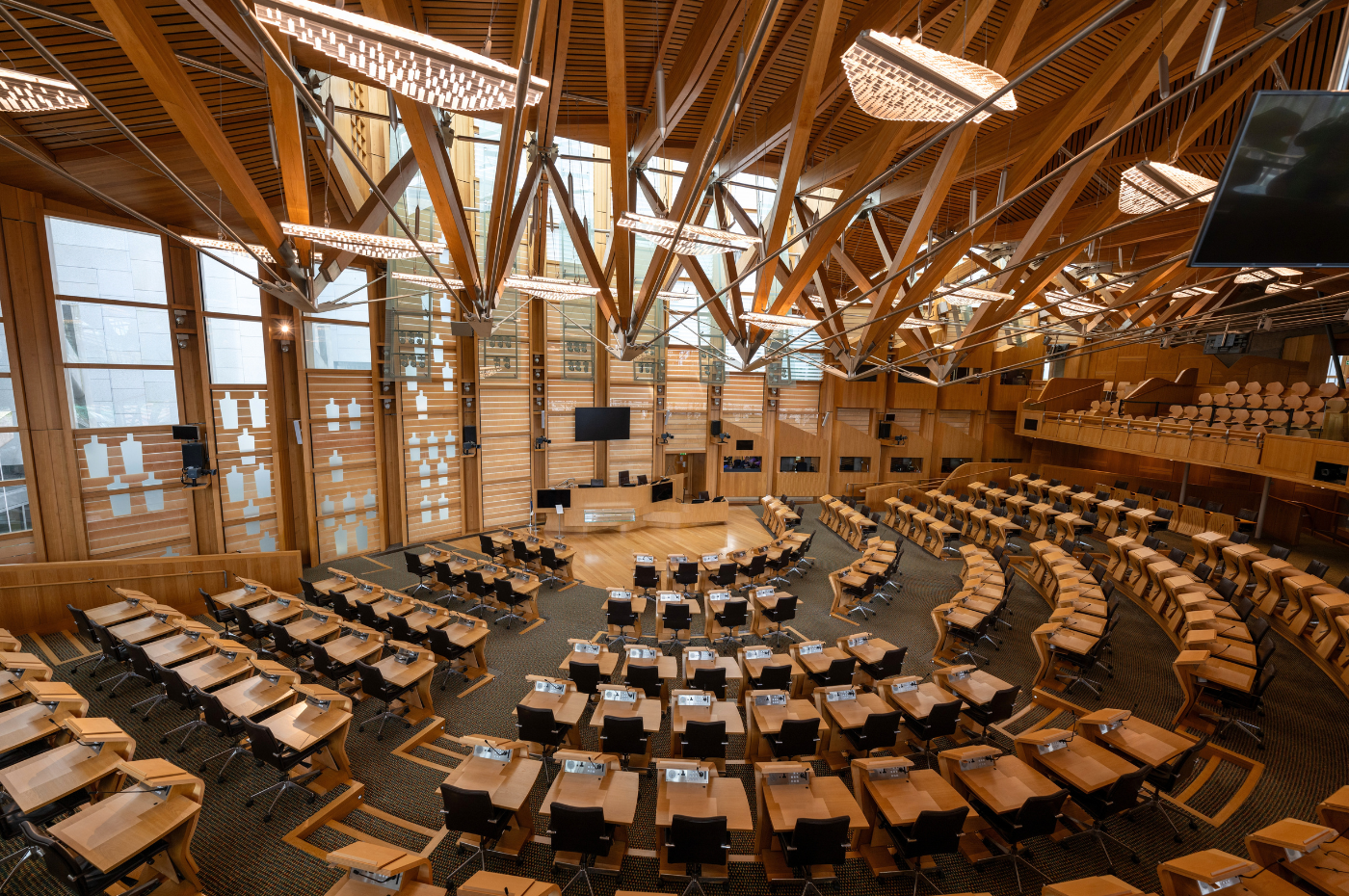
Stage 2 of the Natural Environment (Scotland) Bill continues to be debated by the Rural Affairs and Islands Committee in Holyrood. This latest session began with Mark Ruskell MSP, Sarah Boyack MSP, Tim Eagle MSP and Mairi Gougeon MSP putting forward amendments from their respective parties relating to National Parks. Mark Ruskell spoke on amendments that would move or extend the boundaries of existing National Parks, but this was not supported by Cabinet Secretary Mairi Gougeon as the logistics and funding had not been properly considered and she thought the changes were unnecessary at this time.
Sarah Boyack, Tim Eagle and Mairi Gougeon all spoke on the National Park legislation being strengthened to include more support for local communities in terms of affordable housing, employment security and local economies. Mairi Gougeon invited Tim Eagle and Sarah Boyack to work with the SNP to raise concerns properly and seek agreement between all parties.
The Scottish Greens pushed for an amendment that would see any rewilded areas protected into the future, even if ownership changed. On the surface this might seem like a good idea if an area is doing well, but if it fails or the ground was unsuitable in the first place (as with the Brewdog catastrophe) then there could be no change, and the owner would be lumped with a barren piece of ground.
Rachael Hamilton MSP asked the Scottish Government once again to consider a full report on moorland, given the failure of a similar amendment to the Land Reform Bill. Huge areas of moorland are often lost to rewilding and energy projects, but her request fell on deaf ears once more as Gillian Martin suggested that moorland should not be considered separately when all areas are equally important. Clearly the Scottish Government does not recognise the key benefits that moorland offers.
Tim Eagle, speaking for Douglas Ross MSP, raised concerns over a conflict of interest relating to NatureScot having a seat on specific deer panels. Sir Edward Mountain MSP spoke on behalf of rural organisations’ concerns over the lack of protection for rural jobs, including stalkers and gamekeepers. He also called for the return of a similar organisation to the Deer Commission Scotland, which was dissolved by The Scottish Government some years ago.
Minister for Agriculture and Connectivity Jim Fairlie MSP disagreed with both Edward Mountain and Mark Ruskell, arguing that the Scottish Government’s processes and plans are sufficient. He doubled down on the involvement of NatureScot on deer panels, stating that the organisation has enough experience to be of benefit.
Edward Mountain introduced an amendment to remove the recently-passed open season on male deer. The Minister seemed resistant and was clearly uncomfortable at the thought. Sir Edward also introduced amendments to ensure that experts consulted on deer management matters had actual experience. He requested an independent panel of experienced representatives to oversee any control scheme decisions. None of these views was shared by The Minister.
Tim Eagle introduced an amendment to strengthen the policy making procedure by asking that the Scottish Government “complied with”, rather than “had regard to” the code of practice for deer. The Minister was reluctant to accept this and suggested that the legislation should not be tied so rigidly to the code.
Debate erupted with, largely, Scottish Conservative members grilling Minister Fairlie over landowners’ and land managers’ rights regarding control orders. The concerns raised quite rightly pointed out that neighbouring properties would be forced to be included in any control order issued to a piece of land. This could risk jobs and livelihoods as well as possibly reducing property values, but the Minister disagreed, stating that he trusts NatureScot and others to work together. This is unhelpful, given that NatureScot can simply move ahead with issuing a control order should an agreement not be reached.
Edward Mountain set out opposition to a minimum standard of training to shoot deer, referencing two organisations that recently wrote to Minister Fairlie raising concerns over barriers to deer stalking. The UK is currently one of very few nations where only authorisations from Police Firearms Licensing and the landowner are needed to shoot deer. Most organisations throughout Scotland are not opposed to a minimum standard of training to shoot deer, providing that barriers are not created that would inhibit sporting tourism or new stalkers from progressing. We have this commitment from both Police Scotland and the Scottish Government. As an industry, we have an opportunity to create and implement a practical, meaningful and fit-for-purpose minimum standard. If we do not engage and lead in this process, then perhaps five years from now we will have something forced upon us that we truly don’t want. Long has this sector been on the back foot and defensive, and it has suffered as a result.
One of the very few amendments that Mr Fairlie did support came from his own party member. It is frustrating when key subjects are being debated that have a significant impact on our rural environment, yet almost all but SNP amendments fall. One wonders what the point of debating these topics really is, other than just gliding through a formality. SNP members have a majority on the committee, so any amendment they want to pass or fall usually does just that. A box can then be ticked that it was debated and a majority agreement reached.
When this Bill was introduced, the Scottish Countryside Alliance raised concerns that the Bill offered no commitment to NatureScot working with landowners when issues are identified to avoid the need for a control order. Minister Jim Fairlie confirmed that as it stands, NatureScot is now committed to working with those under scrutiny to form a voluntary agreement prior to sanctions being imposed.

 04 December, 2025