The Countryside Alliance held an incredibly busy fringe meeting at this year’s Plaid Cymru conference, one of the best-attended Plaid conferences I’ve been to in years. There’s no doubt the atmosphere was buoyed by recent polling that puts Plaid almost neck and neck with Reform, as both parties vie to become the leading force ahead of next May’s Senedd election.
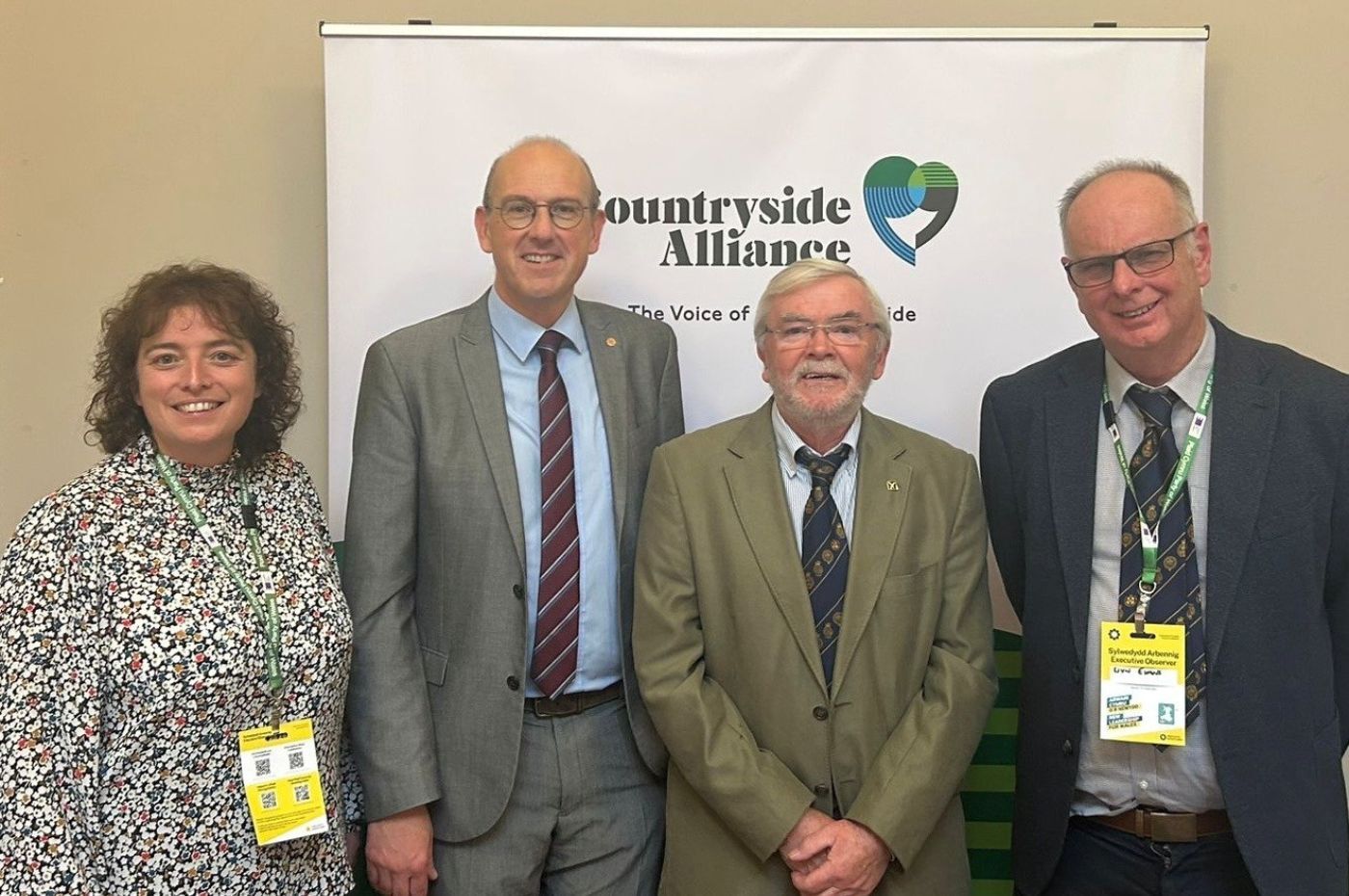
Our panel was chaired by the renowned agricultural broadcaster Dei Tomos and included myself, Llyr Gruffydd MS, Plaid’s spokesperson on rural affairs, and Wyn Evans, a Ceredigion farmer, independent councillor, and long-standing member of several agricultural committees.
Setting the scene for what was a predominantly Welsh-language session, Dei opened with a powerful question:
“Are we in danger of allowing our land and the future of our rural communities to be handed over for profit? Carbon trading is a growing market, but it comes at the expense of productive farmland and risks food security. Producing safe and sustainable food is becoming ever more challenging. Are we fully realising the opportunities to promote and export our exceptional Welsh produce to international markets?”
His words struck a chord. Throughout the discussion, questions from the floor focused heavily on environmental policy, tree planting, and carbon capture. Delegates spoke passionately about the need for Wales to lead the way in tackling climate change, but there was also deep concern about the growing trend of large, often external, companies buying up Welsh farmland to plant trees for carbon offsetting.
While the intentions behind such schemes may be presented as green and forward-thinking, many attendees warned that they risk turning rural Wales into a carbon sink for the rest of the UK, rather than empowering Welsh communities to shape their own sustainable future.
There was a strong call for a community-led approach to carbon capture, renewable energy, and food production, one that balances environmental ambition with the protection of Wales’s landscapes, heritage, and our ability to grow food. The message was clear: climate action in Wales must be rooted in local control, respect for tradition, and genuine community sustainability.
When the conversation turned to food production, the discussion focused on how locally grown, sustainable produce can form part of a healthier national diet. This opened the door to a topical and concerning issue - the recent revelation by Labour Senedd Member for Cardiff Central, Jenny Rathbone, that the Welsh Government is allowing schoolchildren to be served chicken imported from Thailand.
I made it absolutely clear where I stand on this. I said:
“We are not going to grow our children on foreign imported meat of lower standard.”
That remark was met with widespread agreement from both the panel and the audience. This issue is far from over and I intend to keep pushing for change.
All in all, it was a hugely successful and thought-provoking session. But it also served as a reminder of the policy changes Wales needs from any future government. Should Plaid Cymru get that opportunity, it’s fair to say that rural Wales will have much to ask of them and the Countryside Alliance will make sure those voices are heard loud and clear.

 21 October, 2025