
Sound moderator deregulation - British Shooting Sports Council issues guidance
Following the deregulation of sound moderators (also known as silencers or...
View Details 27 May, 2026


.png)
The withdrawal of the Department of Justice’s proposed firearms licensing fee increases marks a significant victory for rural Northern Ireland. Following widespread concern from certificate holders, farming organisations, sporting interests and rural communities, the Justice Minister confirmed that the consultation proposing increases of up to 153 per cent would be withdrawn.
Countryside Alliance Ireland welcomes that decision. The events that unfolded during the Stormont Justice Committee evidence session on 28 May 2026 exposed just how flawed the consultation process had become and reinforced many of the concerns raised by rural communities throughout this debate.
When Department of Justice officials and Chief Superintendent Mark Roberts of the PSNI Firearms and Explosives Branch appeared before the committee, the consultation they had come to defend had already been withdrawn the previous evening. What followed was one of the most revealing public discussions on firearms licensing Northern Ireland has seen in years.
Officials acknowledged that the consultation process could have been handled better. They accepted that key supporting evidence had not been published alongside the consultation documents and admitted that engagement with stakeholders should have taken place before the consultation was launched rather than after public opposition intensified. These were not minor procedural issues: they went directly to the heart of public confidence in the process.
Throughout the session, committee members repeatedly challenged officials on the lack of transparency surrounding the proposed fee increases. Certificate holders were effectively being asked to accept increases averaging 153 per cent without access to the detailed evidence used to justify those figures. The time-and-motion study underpinning the proposals had not been published, leaving respondents unable to properly examine staffing allocations, administration costs, medical certificate expenses or the methodology used to calculate officer time.
The principal justification for the increases was the growing deficit within the PSNI Firearms and Explosives Branch. Chief Superintendent Roberts confirmed that the branch is currently operating with a shortfall of approximately £1.75 million for the 2025–26 financial year, a cost presently absorbed elsewhere within the wider PSNI budget. Committee members rightly questioned how that deficit had risen from approximately £267,000 in 2017–18 to almost £2 million today.
Officials explained that some staffing costs, particularly those relating to Firearms Inquiry Officers, are now consolidated into the central Firearms and Explosives Branch budget and that the branch currently employs 63 staff across licensing functions. However, many committee members and rural stakeholders remained unconvinced that this alone justified such a dramatic increase in costs without any corresponding improvement in service delivery visible to certificate holders.
Countryside Alliance Ireland has consistently maintained that firearms licensing must be properly funded and that fees unchanged since 2016 are unlikely to reflect present-day costs. However, lawful certificate holders are entitled to expect transparency, accountability and measurable improvements in service if they are being asked to pay substantially more.
Instead, rural communities continue to experience lengthy processing delays, inconsistent communication, administrative backlogs and growing frustration with the licensing process. For many farmers, gamekeepers and pest controllers, firearms are not recreational items but essential working tools required for livestock protection, wildlife management and the running of rural businesses.
Committee members also highlighted the stark comparison between the proposed fees in Northern Ireland and those recently introduced in England and Wales. Under the revised arrangements elsewhere in the UK, firearm certificate grants are set at £204 and renewals at £135. The withdrawn Northern Ireland proposals sought £250 for both grant and renewal applications.
Chief Superintendent Roberts pointed to several operational differences between Northern Ireland and England and Wales, including the number of personal protection weapon applications handled by PSNI, the consolidated nature of the Firearms and Explosives Branch and the fact that PSNI currently covers the cost of medical certification as part of the licensing process. While these distinctions are relevant, they did not fully explain why renewal fees in Northern Ireland were proposed at almost double those elsewhere in the United Kingdom.
The committee also heard evidence that PSNI’s Firearms and Explosives Branch compares relatively favourably with some forces in England and Wales in terms of workload and average processing times. However, Chief Superintendent Roberts candidly acknowledged that he was not satisfied with the current level of service delivery and accepted that delays remain a serious issue.
For rural applicants waiting months for renewals, grants or variation applications, comparisons with other police forces offer little reassurance. Farmers waiting on licences necessary for pest control, sporting shooters delayed from lawful participation and registered firearms dealers unable to move stock because variation applications remain outstanding all continue to face significant practical and financial consequences.
The difficulties facing Registered Firearms Dealers emerged as one of the clearest operational problems discussed during the committee session. Dealers increasingly find themselves holding firearms already paid for by customers while variation applications remain delayed within the system. As dealers approach ministerially imposed storage limits, many are prevented from bringing in additional stock, effectively restricting normal business operations.
Committee members rightly observed that many delayed variations involve existing certificate holders whose suitability has already been established. A more proportionate system for prioritising straightforward variation applications could ease pressure on dealers while maintaining public safety.
Deputy Chairperson Emma Sheerin highlighted concerns that digital-only systems risk excluding many rural users, particularly older licence holders, hill farmers and those living in areas with limited digital connectivity.
The committee also discussed the increasing reliance on online application systems.
While not specifically discussed during the committee session itself, Countryside Alliance Ireland has consistently supported the development of digital licensing systems where they improve efficiency, reduce duplication, costs and help speed up processing times for certificate holders. Modernisation is necessary if the licensing system is to become more responsive and sustainable in the long term.
It is important to recognise that the transition to digital licensing has not happened overnight. The PSNI began introducing the online system in 2016 and worked directly with stakeholders during its rollout, including providing a help line, laptops to firearms dealers and representative organisations, and signposting certificate holders towards publicly available digital access points such as library services in order to help support applicants during the transition process.
Given that firearm certificates operate on a five-year cycle, virtually every certificate holder in Northern Ireland will by now have used the online system at least once and, in most cases, twice or more. While some applicants may still require assistance, particularly older users or those in areas with limited connectivity, the online system is now firmly established as the standard method of application and renewal.
Chief Superintendent Roberts stated that feedback on the online system had been overwhelmingly positive, particularly due to the use of pre-populated renewal forms. While this may be true for many applicants, the absence of formal complaints does not mean that barriers do not exist. Rural communities often adapt quietly by relying on family members, constituency offices or local support networks rather than entering formal complaint processes.
The minister’s decision to withdraw the consultation entirely, rather than simply amend it, was the correct one. Officials themselves acknowledged during the committee session that public confidence in the process had already been lost. However, withdrawal does not remove the underlying financial and structural pressures facing the licensing system.
The Firearms and Explosives Branch will continue operating with a significant deficit unless wider reforms are undertaken. Officials also acknowledged that meaningful long-term reform may require primary legislation, something increasingly difficult within current political timescales.
What the withdrawal does mean is that any future consultation process must look fundamentally different. Countryside Alliance Ireland will continue pressing for genuine pre-consultation engagement with stakeholders, full publication of cost breakdowns, measurable service improvement targets and meaningful accountability for delays and inefficiencies within the licensing system.
Lawful firearms ownership remains an essential part of rural life, conservation and land management across Northern Ireland. Certificate holders already operate within one of the most tightly regulated systems anywhere in Europe. The overwhelming majority are responsible, law-abiding individuals who simply want a licensing system that is fair, transparent and efficient.
The Justice Committee session represented an important moment in this debate. For the first time in years, many of the frustrations experienced daily by lawful certificate holders were aired publicly and challenged directly by elected representatives.
The countryside has won an important battle. But the work of securing a licensing system that properly serves rural communities, supports public safety and operates with fairness, transparency and efficiency is far from over.
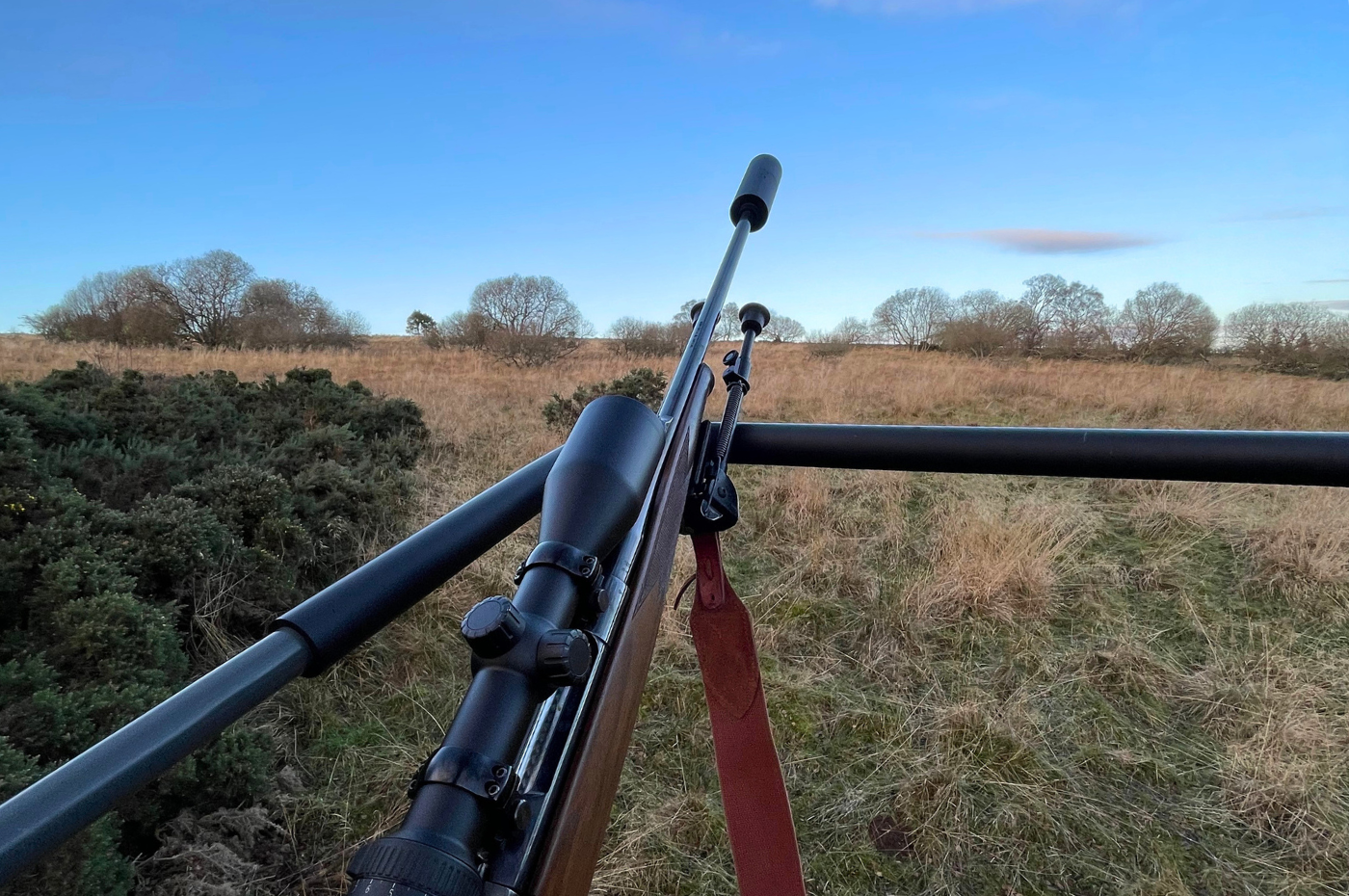
Following the deregulation of sound moderators (also known as silencers or...
View Details
The European Commission's proposal to extend the transition period for the...
View Details
The threats to game shooting are real, and to underestimate them would be very...
View Details