For thousands of years, wild boar have roamed over most parts of Europe and have formed a large part of the diet of both aristocratic families and of those lower down the pecking order. It is thought that wild boar was hunted to extinction in the 17th century both because of the need to have food on the table and to protect crops from being damaged, something which we are very familiar with today when it comes to species such as deer and pigeons.
It is true that wild boar no longer exists within the UK, but we do have a marginally watered-down version that is better known as a feral pig. They look and smell like wild boar, but a more in-depth look at their DNA would tell you that their ancestry is somewhat different to those that existed here centuries ago.
In the 1970’s, numerous illegal introductions were made in England, on top of accidental escapes by pigs in captivity. Small groups, known as drifts or droves, were formed and by the 1990’s they were considered as being re-established in many areas of England. As it stands, the RSPB estimate the UK population of boar at around 2,600 individuals, however, an independent study by Kings College London that has been recently published, reports that an estimated population of 1472 individuals currently enjoy residence in Scotland alone. Now, I am no scientist, but I do keep my ear to the ground and have contact with many farms and estates who state that populations are expanding rapidly. My best guess is that both figures are fairly conservative.
It has taken many years for the Scottish Government to publicly recognise that Scotland has a growing population of boar. It seemed like a conversation that they didn’t want to have, but as they became more prevalent, it became clear that these beautiful, yet destructive, creatures must be considered, particularly in areas of farmland. The carnage they cause is very often clear to see in pasture and areas set aside for grazing. Although it is accepted that much damage can be caused, in the right area, they can also be of great benefit to the land as they turn over soil looking for sustenance, such as roots, grubs, seeds and fruit. This aids in natural regeneration from the turning of the soil and the passing of seeds through their digestive system. Unfortunately though, they don’t always stick to ground that may be suitable and many a farmer wakes to find large areas of grazing turned over by a local drove of pigs.
Many animals carry parasites and other zoonotic diseases. In the case of wild boar, Trichinella is particularly prevalent and can cause the animal to suffer from gastrointestinal issues, swelling of the face and pain. This is a zoonotic issue and can transfer to humans if consumed. It is thought that the parasite can even survive being frozen and so only cooking the meat thoroughly will ensure safety. Testing is available and advised, and samples can be sent away free of charge, should you be lucky enough to end up dealing with a carcass. The Food Standards Agency have compiled guidance for information.
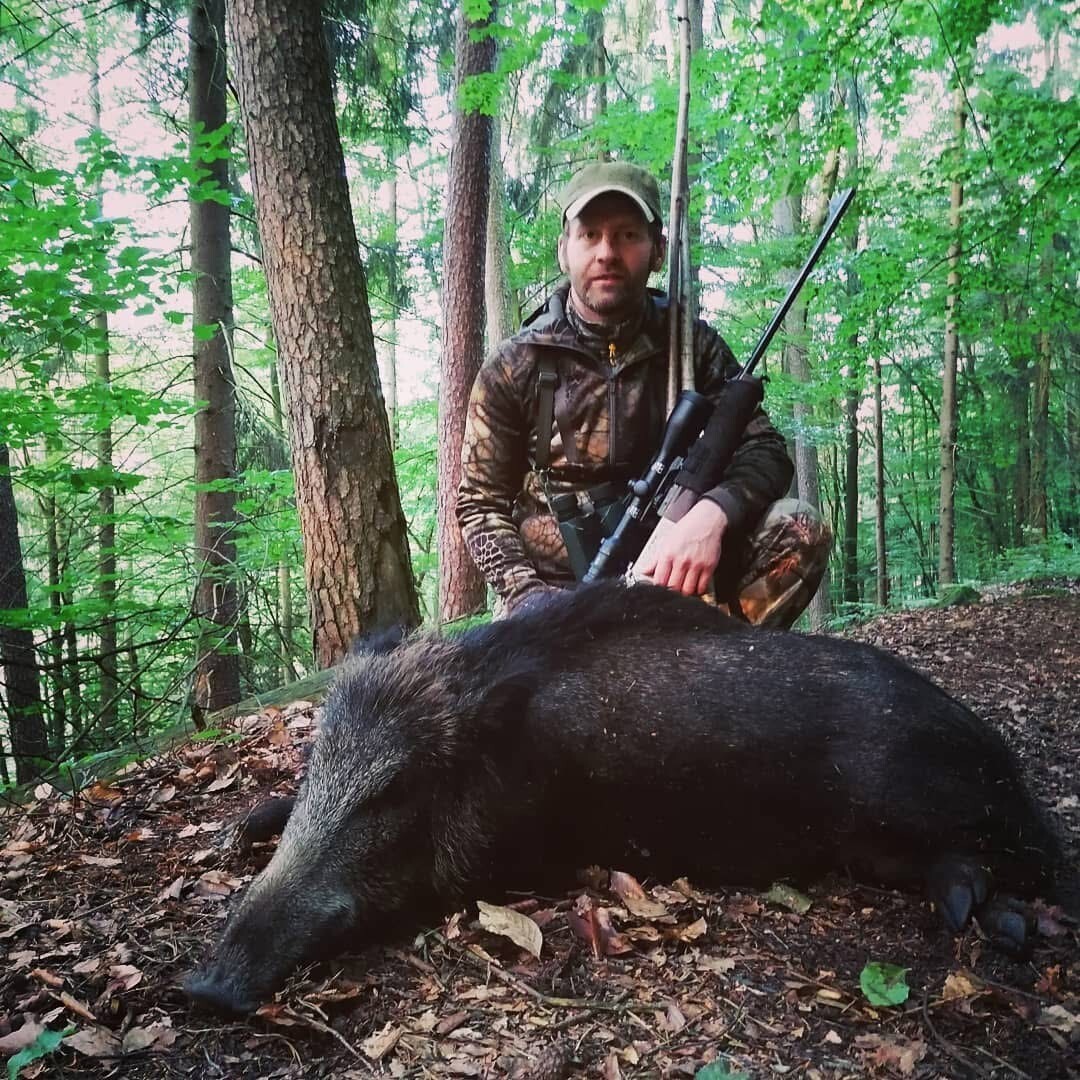
Boars are very secretive animals and are extremely smart. They can sense danger, and the older sows (females) and boars (males) are very wise and so are harder to outsmart. Having hunted boar in France, Sweden and Croatia, I have first hand experience of just how switched on they are. They sleep in the daytime in the thickest of cover and will go undisturbed until they appear in the darkest hours to feed. It is not uncommon for residents to be completely unaware that they have boar in their locality. The dominant sow will lead the drove to ensure the safety of the rest, and the older boars will often be found alone until it is time to mate. Generally, they prefer to stay away from human interference, but if you happen upon a sow, particularly with young at its side, or a boar in the wrong mood, you could be in for a bit of trouble. In Sweden, I was charged by a boar twice. Luckily, I escaped unhurt, but they can do significant damage with their tusks, tearing open arteries and skin like it’s tissue paper. They can also run at speeds of up to 30mph – so escape may not be an option if challenged.
In a previous role, I delivered a Wild Boar Accreditation Course to hunters, and so the careful management of pigs in Scotland is well under way. This, together with the use of night shooting equipment and local knowledge, should enable operators to successfully control numbers. If populations aren’t managed from an early stage, then we run the risk of an overabundance in localised areas and significant damage being caused.
It appears as though wild boar are here to stay, so it is apparent that we need to plan for their presence and population growth. The Scottish Countryside Alliance is at the forefront of a campaign to normalise the consumption of venison, and we see no reason why wild boar can’t be added into the mix. Afterall, it is some of the most flavoursome, organic meat available. If you haven’t tried it yet, then I suggest that you do so. It’s very likely coming to a menu near you soon.

 20 August, 2025