
The Director's Update, May 2025
So often we just fish.
about this blogRead moreHaving mentioned, on numerous occasions, our wonderful coaches – their skills, and dedication which they ladle over Fishing for Schools sessions like a rich and vibrant sauce – we thought it would be fun and beneficial to everyone receiving this newsletter to gather their thoughts on angling as we approach winter.
Like their characters, there is a diversity here which is their collective hallmark.
One snippet which truly resonated with me is from David Thompson, our lead in Northern Ireland, concerning fish handling and welfare – timely.
Social media has so much to answer for. I see, daily, instances of poor fish handling that not only drive me to distraction but are utterly irresponsible.
We all love celebrating what we catch, especially a better-than-average specimen.
But do as David outlines, and put that fish before yourself. CJ
Les Jones, F4S coach in Kent, has this advice for winter anglers:
When pole fishing in the winter, fish at a distance that is comfortable. As the water begins to get clearer the fish tend to move away from the near side bank.
Scale down hook sizes and line diameters. Go easy on the amount of bait that you are using.
These should help to get a few bites during the winter months.
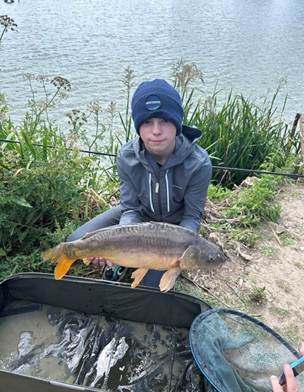
Fishing for Schools coach, Mark Daffern, offers the following advice:
In winter it is worth targeting species that will be willing to feed: perch, chub, pike, grayling, roach. There will be windows of opportunity even on the coldest of days, even if they are brief, when the fish will bite.
Make sure you wrap up warm with good thermal clothing and boots. If your head and feet are warm you are halfway there. Couple that with warm drinks and hot food and that should keep up your spirits and morale. If there is a biting Northerly or Easterly wind, set up an umbrella or shelter; it’s surprising what a difference it makes if you can keep out of biting winds.
A catch shot on a cold winter’s day is well earned and something wonderful to look back upon. The main reason being you earned it when most had stayed at home indoors.
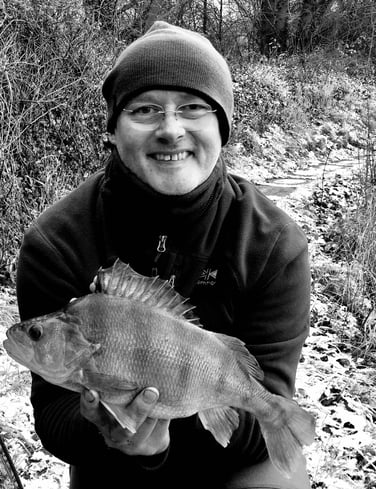
David Thompson in Northern Ireland recommends the following:
Everybody loves the memory of catching the fish of a lifetime, a beautiful fish, or that memorable fishing trip with friends or family. However the best fish photo is one that captures the moment without compromising the fish's welfare. Over a lifetime, I have seen too many people keep an exhausted fish out of water too long, meaning that it takes longer for the fish to swim away. I have seen a few slippery fish drop onto the ground when anglers take multiple shots, trying to get the perfect picture.
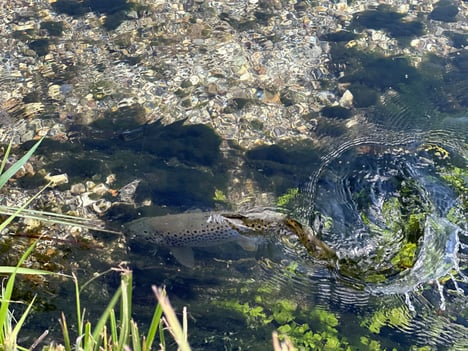
My personal preference is to very simply record a short video, capturing the brief transition from net to pose to release, all within 10 to 15 seconds. Afterward, you can select a still from your video (and get multiple shot options at the same time). Always kneel close to the water rather than stand, reducing the risk of injury if the fish skips or falls. Wet your hands before handling to protect the fish's delicate slime coating and skin and remember to keep time out of water to an absolute minimum, as fish rely on dissolved oxygen in water to breathe.
If you are alone, set your phone's reverse camera and prop it against a bag, a coat, a tree or a rock and simply record. A great photo should leave you with a lasting memory and the fish swimming away safely.


Here is your chance. Place your bids and support Fishing for Schools!
about this blogRead more
They say time flies when you’re having fun, and since Christmas it really has done just that. The...
about this blogRead more