How to prepare
Clothing
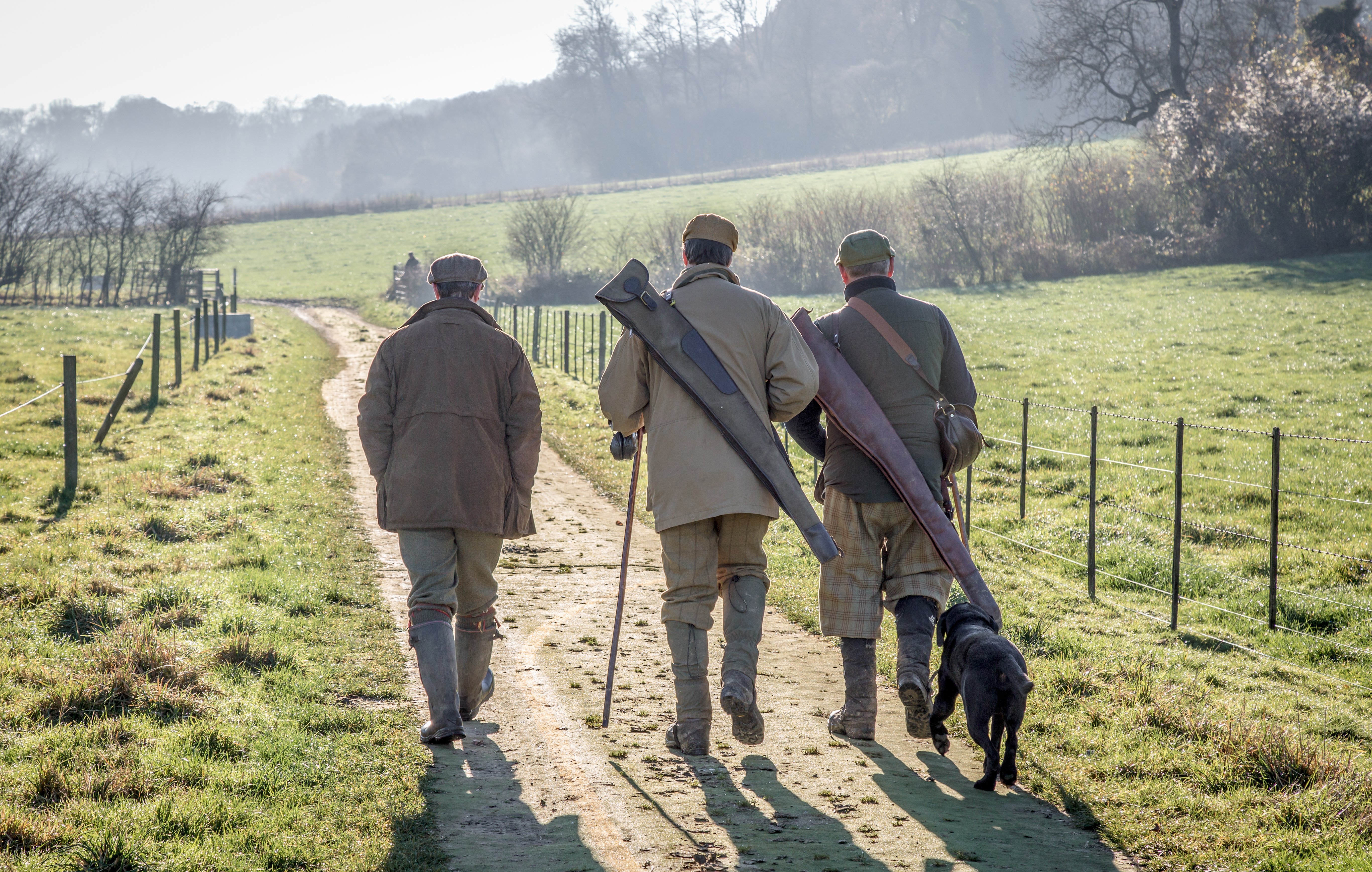
- Dress code is often a matter of personal preference, although it’s a good idea to err on the side of formality. Convention is more relaxed for women compared to men, who are usually expected to wear plus fours with shooting stockings, a shirt and tie. Many women also wear breeks as men do, but others may opt for a skirt or trousers depending on conditions. The formality is out of respect for one’s host, fellow guns, the quarry as well as to maintain traditions and keep the tweed mills in operation.
- Wear muted colours, birds can spot bright or unnatural colours and will steer clear of you. You may think that a bright red jumper or turquoise scarf looks good, but the birds will think otherwise (particularly partridge). Tweed is popular for a reason. Camouflage clothing is considered inappropriate for guns (i.e. the people shooting) when shooting driven game.
- Wear a hat, one that won’t interfere with ear defenders if you wear over ear ones. Tweed flat caps are ubiquitous although some guns wear a trilby or something more idiosyncratic.
- Footwear- long socks and wellies or walking boots are good. Neoprene or leather lined wellies are best for a cold wet day. If you expect to be walking long distances over rough ground, opt for walking boots, unless you are likely to have to cross streams.
- Gloves are sometimes worn in very cold or foul conditions. If you do opt for gloves then wear ones either of tight fitting leather ones or with a fold-away trigger finger.
Kit
- On your first driven day you may or may not have your own gun. If borrowing then your host will look after the gun and cartridges, but you would be wise to cover everything else.
- Take enough cartridges. Running out is a cardinal sin. The number you need depends on several factors but for average shooting I would suggest that each gun arrives with as many cartridges as the expected overall bag. I.e. if it’s a 75 brace day, each gun has 150 cartridges. Asking fellow guns to spot you some cartridges is considered poor form. You don’t have to lug them around all day. Take a pocketful/cartridge belt full and a cartridge bag with you to your peg. Leave the rest in the gun bus/car/wherever your host suggests.
- Have appropriate cartridges. If you’re shooting early season partridge don’t use 34g 4s. 30g 6s are never inappropriate for anyone using a 12 bore. It is only a couple of seasons before lead shot is banned, so you should consider using non-lead cartridges – in this case, a 30g Fe4 is roughly equivalent to a lead 30g 6. Make sure your cartridges have fibre or biodegradable wads as plastic wads are bad for the environment.
- Make sure that you only have 1 bore size of cartridge in your cartridge bag, as having a mixture of bore sizes is a recipe for disaster.
- Don’t forget your ear defenders, hearing loss is no joke.
- Be prepared. If it’s going to be wet, dress appropriately, if it’s going to be sunny, take sunglasses
- Make sure that you have shooting insurance in place before the day, i.e. membership of the Countryside Alliance.
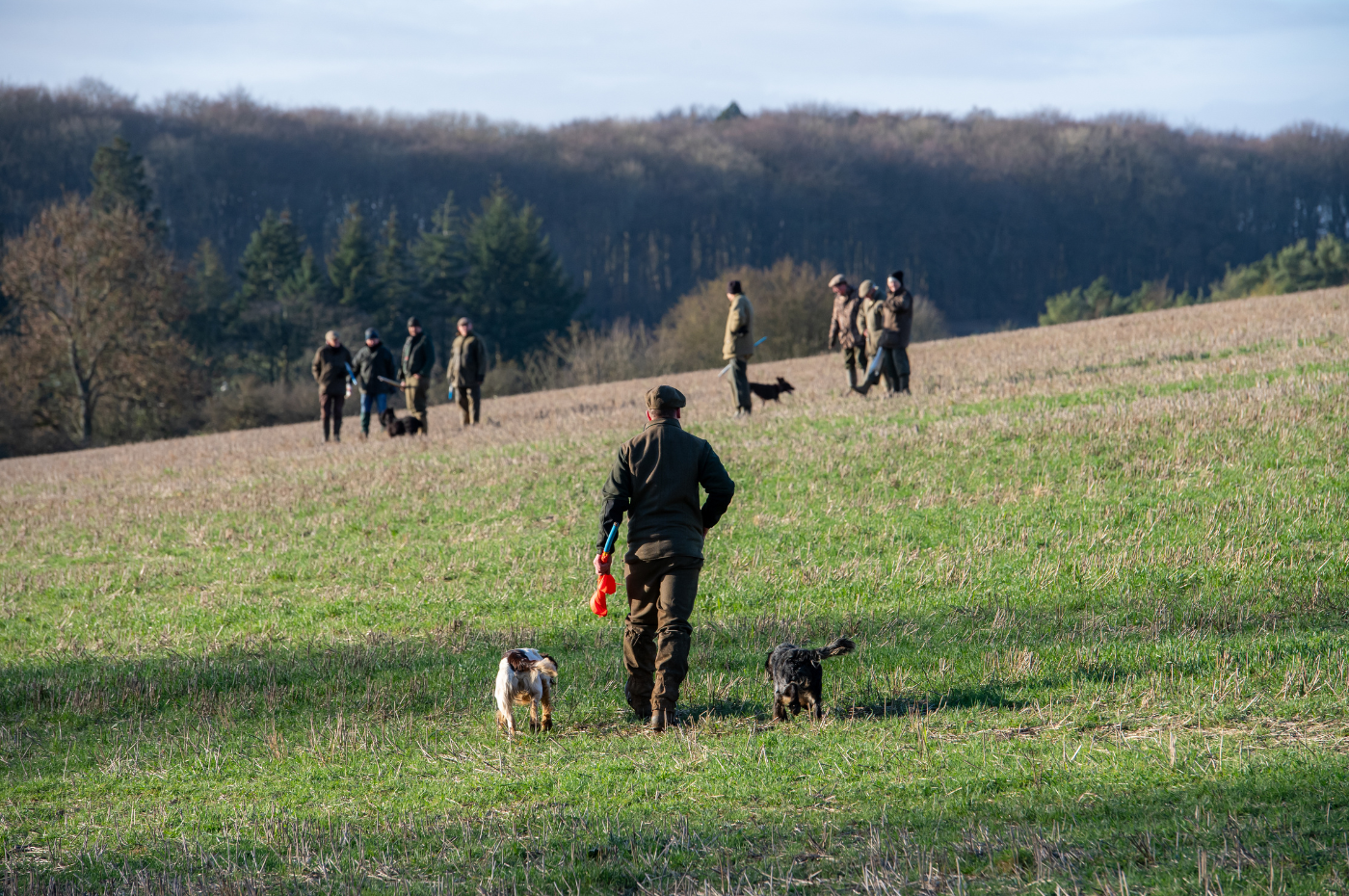
- If you have a dog which you want to bring, ask first and make sure it is capable of behaving in an exciting environment with lots of other dogs. Having an unruly dog on shoot days is not a way to win friends.
Before the day
- Try to read up on what you’re getting into, there are plenty of books, magazine articles, films and YouTube videos on driven game shooting.
- Have a lesson. Go for a specific game shooting lesson at the clay shooting ground with a professional shooting coach.
- Learn what the various game birds look like in flight. Be able to tell a hen pheasant from a cock pheasant.
- Know safe handling of a shotgun inside out.
On the day
- Allow enough time to get there. Punctuality is important - being late is very rude.
- Don’t forget the essentials: gun, cartridges, shotgun certificate, ear defenders, cash for tip, present for host (if appropriate).
- On arrival, you will likely be offered refreshments and perhaps a bite to eat.
- It is best to advise the person running the day that it is your first driven day. This is not a cause for embarrassment, everyone was new once and most will be delighted to help show you the ropes.
- There will be a shoot brief by the shoot captain or head keeper, who will explain the rules and format of the day.
- Often there will be rules like ‘no ground game’ or ‘no woodcock’. If you don’t understand, ask.
- The peg system will be explained, i.e. numbering from the left or right, and how many to move up or down after each drive.
- What will signal the start of each driver, ‘live on peg’ is a usual instruction, which is to say that as soon as you reach your peg you should be ready to shoot.
- What will signal the end of a drive (usually a horn or whistle)
- You will be reminded to mark your birds (i.e. look and remember where shot birds land) and what to do with spent cartridges.
- If you have any questions, now is a good time to ask them.
- Pegs will be drawn, this is your peg number for the first drive
- You’ll load up and head off for the first drive, gun in slip
On the peg
- On the peg, look around, know where your fellow guns are, what is the ground around you, where the birds should be coming from, where the beaters and pickers up are, and most importantly, where your safe shooting arcs of fire are. Find sure footing.
- If ‘live on peg’, take your gun out of your slip and put some cartridges into the chambers and get into a comfortable position with your gun barrels either pointing skywards or towards the ground.
- Do not put your finger to the trigger unless you are about to pull it.
- Most game guns have automatic safety, it resets every time the gun is broken.
- Be ready, constantly watching the flight lines.
- Never shoot at anything that doesn’t have sky behind it.
- Shoot at birds which are both at a sporting height and which pass over you. Low birds are a no-no, it is unsporting and ruins the meat. Shooting birds which pass over neighbouring guns is called ‘poaching’ and is rude.
- Shooting at birds which are out of range is also poor form, there is a higher chance of wounding. If the bird is beyond your skill to kill, don’t fire at it.
- IF IN ANY DOUBT, DO NOT PULL THE TRIGGER
- When you successfully kill a bird, look to where it comes down and make a mental note. Do this for every bird you shoot.
- Do not spare the 2nd barrel if the bird is shot but not killed.
- If a neighbouring gun ‘pricks’ a bird (wounds without killing), and has no more shots, you should try to kill it, even if it is not over you.
- If you prick a bird, tell a picker up at the end of the drive and where it might be. These might come down near you and run around, unable to fly, known as “runners”.
- If you are seeing more birds than anyone else (more than your fair share), you should be more selective with which birds you shoot, i.e. only take on the higher ones.
- Do not forget to compliment fine shooting from your fellow guns, a shout of “good shot” is often appreciated.
- If you see a bird break cover towards other guns then you can call out to alert them, “OVER!” and perhaps a direction is the usual call. Not necessary if lots of birds are flying.
- Likewise, if you see a bird break cover which shouldn’t be shot then shout the name of the bird i.e. “GUINEAFOWL!” “WOODCOCK!” or “SPARROWHAWK!”, this needn’t be done for small songbirds, they are obvious to even the most ignorant ornithologist.
- At the end of the drive you will hear a horn or a whistle. At this point make your gun safe, unload it and place it in its slip. Gather up your shot birds with the priority being any runners and those not dead. Pickers up will help you with this, and be sure to direct them to where shot birds will be. Once done, gather up your empty cartridges and then go and meet up with the other guns
- Picked birds should either be left on your peg to be collected by the pickers up, or taken to the game cart.
- If you need to climb a fence or wall at any point, ensure your gun is unloaded and broken. If you are able to hand it to someone whilst you cross show them it is empty before handing it to them.
- If you need to offload spent cartridges, then ask where to do so, a bucket or box in a car, gun bus or game cart is the usual provision.
Elevenses and lunch
- After the 2nd or 3rd drive there will be elevenses, a chance to have a chat, a bite to eat, and some refreshments. If there are beaters there as well as guns then go and chat to them too, compliment them on the quality of the birds. One of the best things about shooting is its community.
- If you need the loo, these are the best times to find one.
- Lunch will either be between the later drives or after the end of the final drive, which is known as ‘shooting through’.
The end of the day
- When the day is over there is the important part of tipping the keeper and receiving a brace (or more) of birds.
- When tipping the keeper be generous, unless the day was very poor. Tips vary from shoot to shoot, so if you’re not sure of on the going rate then quietly ask the shoot captain or host.
- Tipping should be subtle, fold up the notes into the palm of your right hand and shake the head keeper’s hand, they’ll know what to do and will hand you a brace with their left hand. If you want to take more than a one brace then ask, offering to pay the going rate. Make sure to thank the keeper for putting on a good day and compliment the quality of the birds.
- Do not decline to take a brace, there is no excuse.
- If you don’t know what to do with birds in the feather then ask a friend for help, ask your local butcher to prepare them or have a look online. Some shoots give the guns shrink-wrapped, oven-ready birds.
At the end of the day the most important thing is safety, but you must also remember to enjoy yourself!

 29 August, 2025