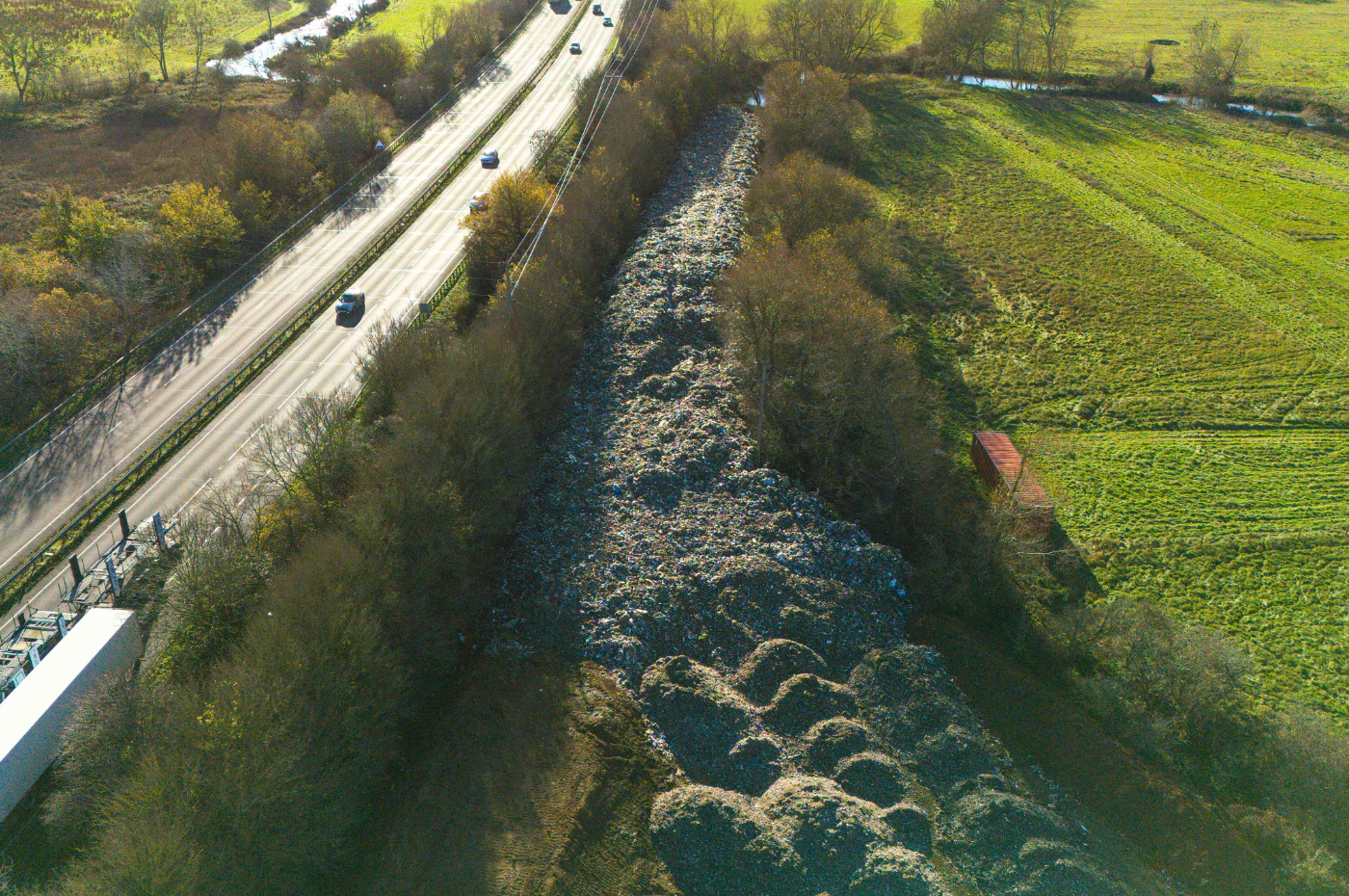
A shocking case of industrial-scale illegal dumping on the banks of the River Cherwell was debated in Parliament yesterday (06 January), starkly exposing the scale of waste crime in rural Britain – and on the continuing lack of clarity over how such crimes should be reported and tackled.
The Adjournment Debate was secured by Calum Miller, Liberal Democrat MP for Bicester and Woodstock, whose constituency includes the affected stretch of the river near Kidlington. He described how around 20,000 tonnes of waste were dumped illegally on a floodplain beside the A34, posing serious risks of pollution and fire. The scale of the crime, he said, was “one of the most serious cases of criminal dumping anywhere in the country”.
Mr Miller paid tribute to local anglers, residents, councillors and campaigners who raised the alarm, pressing the Government on the timetable for clearing the site, the risks to the river, and who would ultimately bear the cost. He also highlighted the wider national picture, citing research suggesting that one in five adults has witnessed large-scale illegal dumping and that the problem is getting worse.
Intervening in the debate, Adam Jogee, Labour MP for Newcastle-under-Lyme, drew parallels with the case of Walleys Quarry in his own constituency and called for a clear, national strategy. Vikki Slade MP (Liberal Democrat, Mid Dorset and North Poole), raised practical questions about how members of the public can check whether waste carriers are properly licensed.
Responding for the Government, the Defra Minister Mary Creagh MP confirmed that the Environment Agency has taken the exceptional step of leading the clearance of the Cherwell site, with preparatory work under way and removal of waste expected to begin in February. She stressed that this is a last resort, taken only where there is a serious risk to public safety or the environment, and that efforts are ongoing to identify those responsible and recover costs under the “polluter pays” principle.
Crucially, the Minister also acknowledged a fundamental weakness in the current system. Reflecting on visits to fly-tipping sites elsewhere, she asked:
“Once something has been reported, what does the local authority, the police or the [Environment Agency] do? What is the definition of ‘major site’? …What is the playbook, what are the definitions and where do national agencies step in?”
She recognised that confusion over who to contact can lead to inaction.
That admission matters. If even the Minister responsible for waste policy sees a lack of clarity, it is hardly surprising that members of the public, farmers and landowners are unsure where to turn. For years, the Countryside Alliance has argued for a single, well-known route for reporting waste crime. A straightforward option would be the police non-emergency number, 101, which is already widely recognised and trusted.
The debate also underlined the scale of the problem. Waste crime is estimated to cost the country around £1 billion a year, including £150 million in evaded landfill tax. As Mr Miller argued, relatively modest investment in detection and enforcement could pay for itself many times over.
The River Cherwell case is a reminder that waste crime is not a victimless offence. It blights rural landscapes, threatens waterways and leaves communities angry and frustrated. Clearer reporting routes, stronger enforcement and a genuinely joined-up national approach are essential if rural Britain is to be protected from this growing criminal industry.

 07 January, 2026


.jpg)
-1.png)
.png)