Drought support leaves questions unanswered
The Prime Minister, Andy Burnham, visited a Cornish farm on Saturday (15...
View Details 15 April, 2026



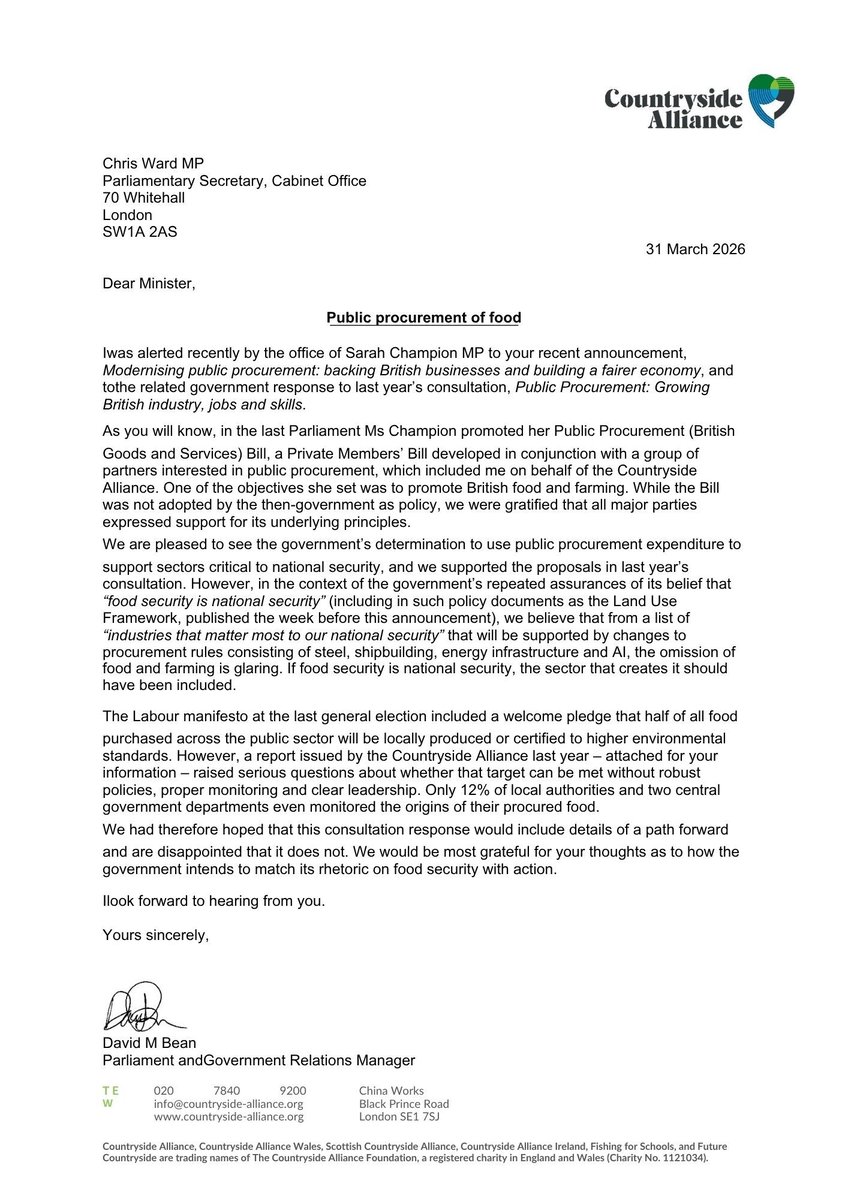
The Countryside Alliance has written to the Cabinet Office to challenge the omission of food and farming from a new list of strategic sectors set to benefit from tighter rules on where public bodies should spend their money.
One of the government’s standard lines whenever the subject of food and farming comes up is “food security is national security”. Often said by ministers, the mantra has even made it into official statements of government policy including the Land Use Framework, published only a fortnight ago. Further, the Labour Manifesto at the last general election included a welcome pledge that half of all food purchased across the public sector will be locally produced or certified to higher environmental standards.
When the government consulted last year on changes to public procurement rules, it therefore seemed obvious that this would be a vehicle for movement in support of Britain’s vital food and farming sector through procurement spending.
Instead, what the government announced was a list of “industries that matter most to our national security” and will be supported by changes to procurement rules. It consisted of steel, shipbuilding, energy infrastructure and AI. All crucial industries in themselves but sharing one critical trait: none of their products can be eaten. The omission of food and farming was glaring.
The Countryside Alliance letter to the Parliamentary Secretary, Cabinet Office, Chris Ward MP, drew attention to the contrast between government rhetoric and action. It also pointed to our report issued last year, Backing British? Benchmarking public food procurement, which raised serious questions about whether the government’s target can be met without robust policies, proper monitoring and clear leadership. Only 12% of local authorities and two central government departments even monitored the origins of their procured food.
We expressed disappointment that the government’s response to its consultation, and the accompanying announcement of what it considers strategic sectors, and asked what steps the Cabinet Office – responsible for public procurement – plans to take to bring what the government does more closely in line with what it says.