Following a packed reception at the Reform UK conference in Birmingham the Countryside Alliance proceeded to Bournemouth on Sunday (21 September) for a Liberal Democrat Party Conference fringe event that featured some of the party’s leading rural lights.
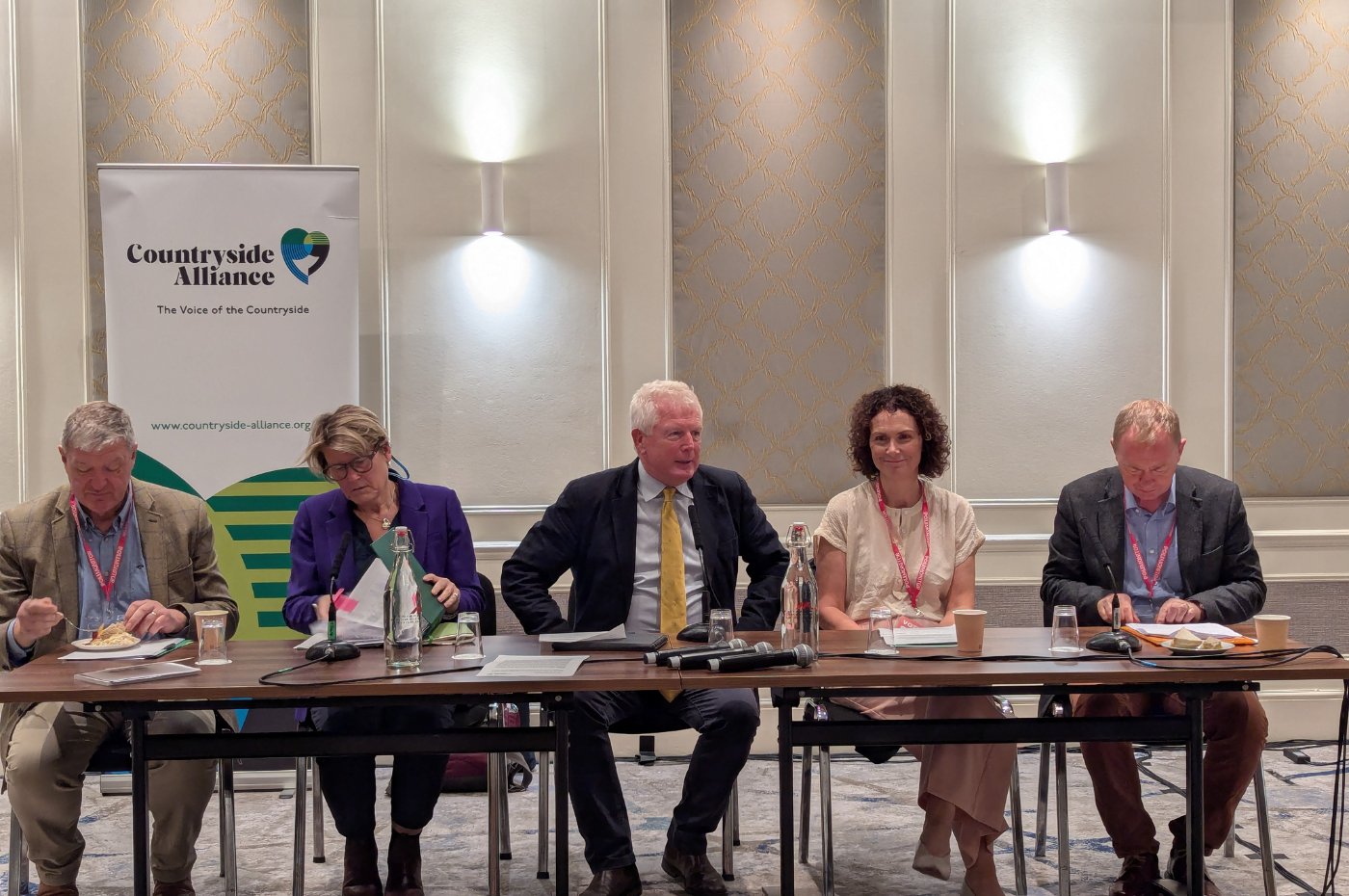
Activists, interest groups and other guests heard from a panel chaired by Alliance Chief Executive Tim Bonner comprising Tim Farron MP (Westmorland and Lonsdale), the party’s Environment, Food and Rural Affairs (EFRA) spokesperson and a former party leader; Wendy Chamberlain MP (North East Fife), Chief Whip and Deputy Leader of the Scottish Liberal Democrats; Sarah Dyke MP (Glastonbury and Somerton), a by-election winner and EFRA Select Committee member; and Alistair Carmichael MP (Orkney and Shetland), the Chair of the EFRA Committee.
Mr Bonner opened by pointing to the political opportunity created by Labour’s faltering rural support and emphasised the breadth of communities represented on the panel. Mr Farron took up that theme, praising the Alliance’s role in connecting politicians with rural Britain. He stressed that the Liberal Democrats’ success in the countryside depends on consistent local presence and campaigning, not one-off gestures. Rural issues, he argued, go well beyond farming and encompass housing, transport and access to services. Mr Farron was especially critical of the “first come, first served” approach to farm funding, which he said favours larger landowners at the expense of smaller family farms.
Ms Chamberlain, drawing on her Scottish background and constituency experience, underlined the diversity of rural life and warned against treating rural communities as homogenous. She highlighted the precariousness of farm incomes and her work to reform Universal Credit to suit fluctuating agricultural earnings better. In Scotland, she noted, the government’s changes to inheritance tax face unique challenges because of heritable tenancies, and policy uncertainty has inhibited investment. She argued that the SNP’s reluctance to diverge from EU rules is costing Scottish farmers opportunities, particularly in innovation such as gene editing. Looking ahead to the 2026 Scottish elections, she was bullish about the Liberal Democrats’ prospects in rural Scotland.
Ms Dyke spoke with deep personal conviction as the daughter and sister of farmers, describing Brexit as a “disaster” for family farms. She warned that the Family Farm Tax, with its poorly designed thresholds, risks forcing multigenerational farms to close. The mental health toll in the sector, she said, is profound: long hours, isolation and financial stress have driven a worrying rise in suicides, with young farmers citing mental health as their most pressing challenge. Women in farming, juggling multiple roles while facing inequality and sometimes domestic violence, are particularly vulnerable. Ms Dyke insisted that the Liberal Democrats will continue to champion family farms as the backbone of rural communities.
Mr Carmichael, meanwhile, focused on the fallout from government mismanagement of agricultural policy. The Family Farm Tax, he warned, will leave ordinary farms facing crippling liabilities, forcing land sales and undermining food security. He condemned the dysfunction within Defra, from the abrupt closure of the Sustainable Farming Incentive to the lack of strategic vision, and argued for a single regulator to oversee the entire food chain from farm to supermarket (an issue on which he has campaigned with support from the Alliance). He also reserved strong criticism for the water industry, describing it as “rotten to the core” and run more like a hedge fund than a public utility.
Questions from the floor covered tenant farming, flooding and water pollution. Responses emphasised the need for stable, long-term funding, stronger regulation of water companies and better support for new entrants through county farms and council land. Mr Bonner concluded by asking about the decision of the Liberal Democrats’ sole Member of the Senedd, Jane Dodds, to make her support for the Welsh Labour government’s budget contingent on support for a ban on greyhound racing. Mr Carmichael said he understood this was a matter of personal interest to her, and the rest of the UK would need to watch and learn.
The event demonstrated the Liberal Democrats’ determination to carve out a distinctive rural agenda at a time when both main parties are vulnerable in the countryside. As Mr Bonner concluded, the political opportunity is there: what matters now is whether the Liberal Democrats can seize it.

 24 September, 2025


.jpg)
-1.png)
.png)