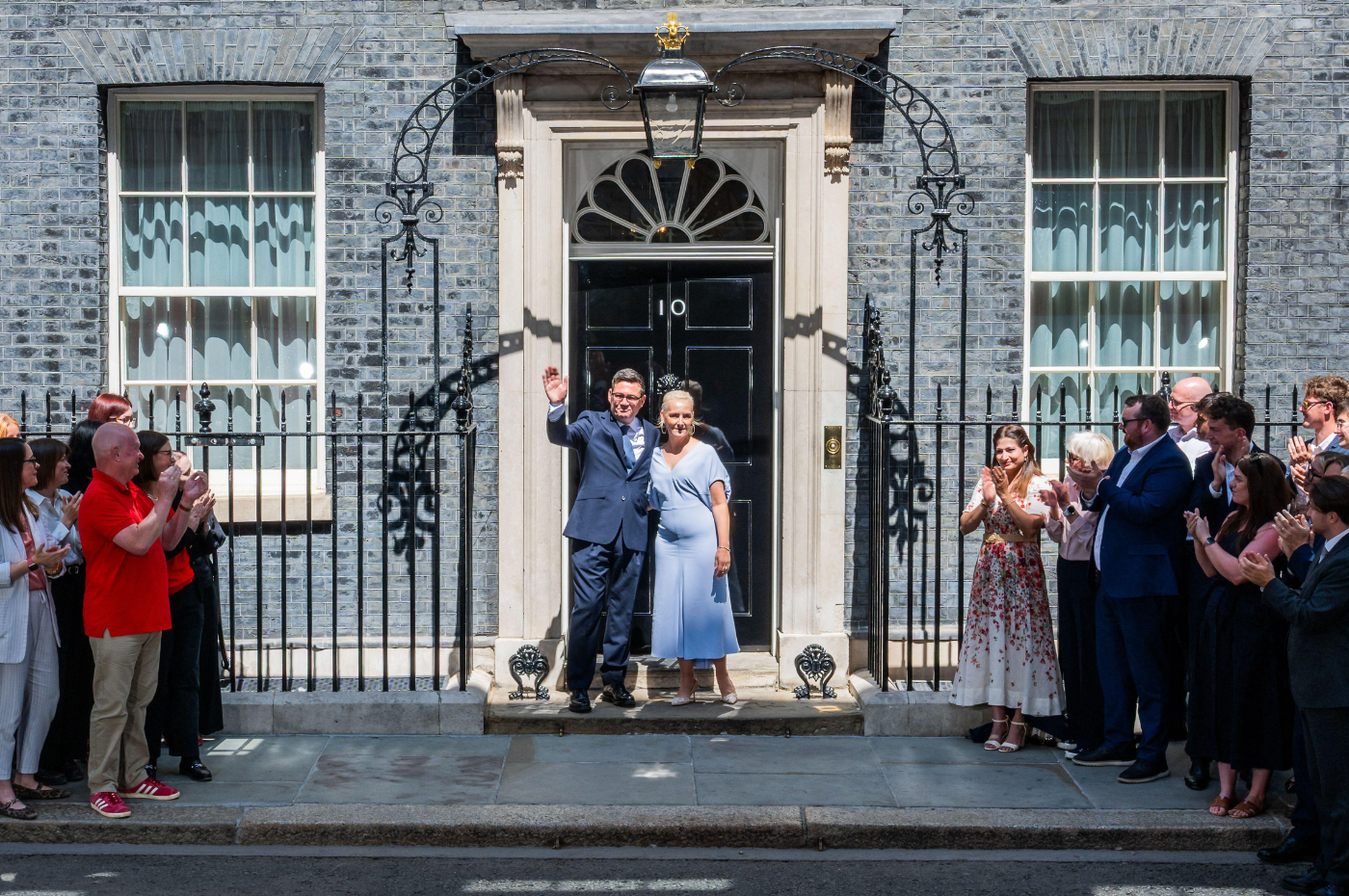
Following his uncontested bid for the leadership of the Labour Party, Andy Burnham has been appointed by the King as Prime Minister and has since been assembling his new Cabinet and government.
Change has been nigh on wholesale. Departures from the last iteration of Sir Keir Starmer’s government include former Chancellor Rachel Reeves, former Foreign Secretary David Lammy, former Housing, Communities and Local Government Secretary (and previously Defra Secretary) Steve Reed, former Science, Innovation and Technology Secretary Liz Kendall, former Business Secretary Peter Kyle and former Attorney General Lord Hermer. Of the three holders of the Great Offices of State besides that of Prime Minister, only Shabana Mahmood has been retained as Home Secretary while the former Foreign Secretary, Yvette Cooper, has been moved to become Secretary of State for Health.
Returning from previous phases of the Starmer government are Angela Rayner as Housing, Communities and Local Government Secretary, Wes Streeting as Defence Secretary, Louise Haigh as First Secretary of State, Chancellor of the Duchy of Lancaster and Minister for the Cabinet Office, and John Healey, who only recently resigned as Defence Secretary over what he considered inadequate funding for defence improvements from the Treasury, as Chancellor of the Exchequer.
Rural eyes will as ever be focused on the role of Secretary of State for the Environment, Food and Rural Affairs, where the nod has gone to Angela Eagle – a direct promotion from her recent role as Minister of State in the Department, although she spent a short spell away as Security Minister after Starmer’s last-ditch mini-reshuffle in June. Like the new Prime Minister she served in government under Tony Blair and Gordon Brown, and in opposition since the leadership of Ed Miliband. As Minister of State her brief included food security and rural affairs, so while an MP for the fully urban seat of Wallasey in Merseyside cannot be supposed to have authentic rural credentials, we may hope for some compensation from her recent experience of these policy areas. She replaces Emma Reynolds, who has become Chief Secretary to the Treasury.
The role of Energy Secretary is increasingly important to the countryside, with the incumbent shortly to be responsible for deciding how Britain’s energy system will build out generation capacity over the coming years. The role has gone to Miatta Fahnbulleh, a career policy professional with an economics focus prior to her election for Peckham in 2024. Ms Fahnbulleh succeeds the deep Net Zero enthusiast Ed Miliband, who can now evangelise for action against climate change on the international stage as Foreign Secretary.
The retention of Shabana Mahmood as Home Secretary may be good news for rural communities as the government gears up for the most significant set of policing reforms in England and Wales in several generations. The Countryside Alliance, in concert with other rural groups, has been advocating strongly for the retention and expansion of effective rural policing knowledge and capacity under the new structures, as well as for the consolidation of firearms licensing under a single national body. Continuity at the top of the responsible department may mean that hard work will not be undone by the broader change in government.
Junior ministerial appointments will be made over the coming days, although past performance suggests their portfolio responsibilities may not be finalised and published for several weeks. With the House of Commons in recess for the summer, it will be some time before the new team will come under parliamentary scrutiny.
A key question is whether any of Labour’s rural intake from the last election will see promotion into government, whether at Defra or elsewhere, which has largely eluded the cohort to this point. For the new Prime Minister to include more rural voices at departmental tables would be a wise move. At a time when relations between government and rural communities are at a historic low, it is imperative that the new administration resets its relationship with the countryside. That can only be done by dropping the toxic culture war on the countryside – exemplified by policies such as the Family Farm Tax, proposed ban on trail hunting, and restrictions on shooting – and by working with rural communities, not against them.
Update 24 July: Ministerial appointments at Defra and elsewhere have now concluded and unlike the Cabinet, most of the more junior roles have remained with their previous holders. The sole exception at Defra has been the replacement of the former Waste Minister (and former Shadow Secretary of State back in 2010-2013 under the leadership of Ed Miliband) Mary Creagh with Jenny Riddell-Carpenter, MP for the rural constituency of Suffolk Coastal since defeating the former Secretary of State, now Baroness Coffey, at the last general election. Since then she has led the Labour Rural Research Group. Ministerial portfolios remain to be announced.

 21 July, 2026


.jpg)
-1.png)
.png)