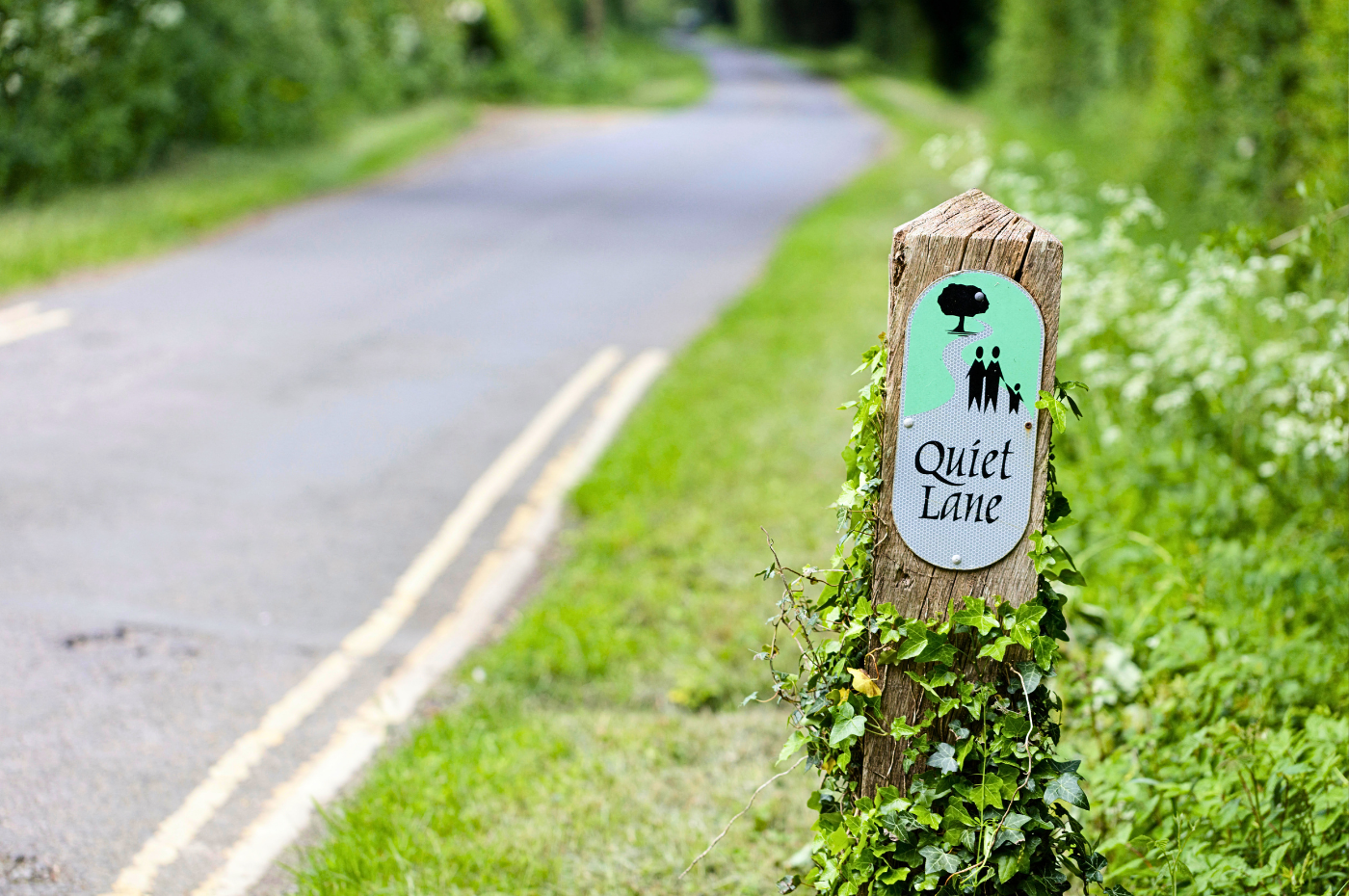
The debate over so-called “quiet lanes” – sometimes described as rural low-traffic neighbourhoods – is gathering pace following proposals by Oxfordshire County Council to pilot new schemes restricting through traffic on selected country roads.
The proposals aim to create safer spaces for walkers, cyclists and horse riders by reducing or preventing through traffic where alternative routes are available. While the idea has prompted comparisons with urban low-traffic neighbourhoods, in a rural setting the issues are rather different.
The original concept of quiet lanes was about using traffic calming measures to encourage motorists to drive more carefully, recognising that country roads are shared with pedestrians, cyclists and horse riders. The current debate concerns whether some authorities should go further by bringing speed limits down as low as 20mph or physically preventing through traffic on certain roads.
For the Countryside Alliance, the starting point must always be the people who live and work in the countryside every day. Quite apart from their recreational usage, rural roads are essential arteries for farming, local businesses and daily life, connecting communities to work, schools, healthcare and services. Any proposal that disrupts those functions would be hard to justify.
Agriculture deserves especial consideration. Farmers often need to move large machinery between fields and frequently to have it brought in from outside the local area; they rely on rural roads throughout the year. Local authorities must ensure that any restrictions do not create impractical diversions or make routine agricultural activity more difficult. Farmers and land managers should be fully involved in developing any proposals.
Policymakers must also consider the needs of elderly and disabled people who are already marginalised by rural isolation. Limited public transport options combined with physical barriers mean private vehicles are essential for such residents to maintain independence. Active travel, particularly cycling, is simply not a realistic alternative, and schemes should be designed with that reality firmly in mind.
None of this means every quiet lane proposal should be opposed. Where there are genuinely suitable alternative routes, ones that are safe and have sufficient spare capacity, well-designed schemes could improve safety and make these roads more enjoyable for residents and countryside users alike. Horse riders especially could benefit from quieter roads that reduce the risk of serious accidents.
The Countryside Alliance cannot reasonably take an absolute position on rural traffic restrictions because there will always be local variation. Some areas may genuinely benefit, whereas others may be disadvantaged. What matters is that local decision-makers listen to residents, designing schemes in full consultation with them while recognising the realities on the ground.
That consultation should include parish councils, farmers, equestrian groups, disabled residents, local businesses and others whose daily lives may be affected. Where significant concerns cannot be addressed, councils should be prepared to amend or abandon their plans.
Ultimately, quiet lanes should not become another battleground between motorists and cyclists. The test is whether a scheme improves safety and quality of life without undermining the ability of people to live, work, visit and earn a living in the countryside.
Issues such as this also underline the importance of local democracy. Decisions taken by county and parish councils can have a profound impact on rural communities, making it essential that local representatives understand the practical realities of life in the countryside.

 16 July, 2026


.jpg)