
Wittersham Primary’s Experience of Fishing...
Creating meaningful and memorable experiences is at the heart of life at Wittersham Church of...
about this blogRead moreEach school that takes part in Fishing for Schools brings a different story – and a different group of pupils who benefit in their own way. In this Q&A, we speak with Horton Park Primary School in Bradford. Here, they share what the experience has meant for their pupils, and how outdoor learning has made a difference.
Tell us a little bit about your school:
Horton Park Primary School is a large, diverse inner-city school in Bradford. We serve a community facing significant challenges, including deprivation, and support a high proportion of pupils with SEND.
We are committed to developing the whole child, with a strong focus on wellbeing, personal development and positive relationships. Our school drivers of resilience, problem-solving, communication, vocabulary development, meaningful experiences and mutual respect are embedded throughout school life.
Programmes such as Fishing for Schools provide valuable opportunities for pupils to develop these attributes in authentic contexts, building confidence, resilience and life skills through positive outdoor experiences.
How did you hear about Fishing for Schools?
We first heard about Fishing for Schools through a school newsletter. The programme's focus on wellbeing, confidence and personal development immediately appealed to us and closely aligned with our school drivers.
We recognised the potential for pupils to develop resilience through challenges, problem-solving through practical experiences, communication through collaboration, and mutual respect for others and the environment. We were keen to offer our pupils an enriching experience that would extend learning beyond the classroom.
What impact has Fishing for Schools had on your students?
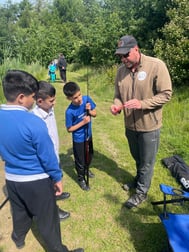
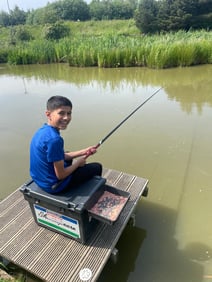
Fishing for Schools has had a significant impact on our pupils, particularly those who can find the classroom environment challenging. The programme has helped children develop resilience, confidence, patience, perseverance and emotional regulation in a calm outdoor setting.
We have seen improvements in behaviour, engagement and self-esteem, with many pupils returning to school more confident and motivated. The programme has strengthened pupils' communication skills, encouraging them to listen, share ideas and support one another. It has also developed problem-solving skills as children learned to overcome challenges and adapt their approach when things did not go to plan.
The rich outdoor environment has provided valuable experiences that many pupils would not otherwise have access to, helping to broaden horizons and extend their understanding of the natural world. Discussions around fishing, wildlife and conservation have also supported the development of pupils' vocabulary, while interactions with peers and adults have reinforced the importance of mutual respect.
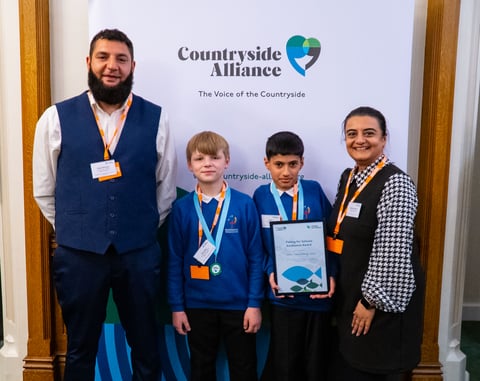
A particular highlight was attending the award ceremony at Westminster. Our pupils were incredibly proud to represent the school, and the experience helped raise aspirations, confidence and self-belief. The excitement around the programme has continued long after the sessions ended, creating a real buzz around school and outdoor learning.
What are the five key benefits your students have gained from F4S?
Can you share any specific success stories or memorable moments from your students' experiences in Fishing for Schools?
One of the most rewarding aspects of the programme has been seeing pupils who often struggle in the classroom thrive in a different environment. Children who can find focus and emotional regulation difficult demonstrated remarkable resilience, problem-solving and determination throughout the sessions.
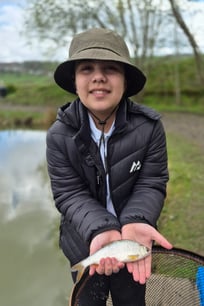
A memorable moment was seeing a pupil with very little confidence catch their first fish. The pride on their face was clear to see. Their patience and perseverance led to success, which helped build confidence that carried back into school.
The programme also created opportunities for pupils to develop their communication skills and vocabulary, as they discussed techniques, equipment and wildlife with peers and instructors. Pupils showed genuine mutual respect for one another, celebrating each other's achievements and supporting those who found aspects challenging.
The wider impact has been significant, with pupils returning excited to share their experiences and inspiring others to take an interest in fishing, conservation and outdoor learning.
How do you feel our programme addresses the needs or challenges faced by your students?
Many of our pupils face barriers linked to deprivation, low confidence, wellbeing needs and SEND. Fishing for Schools provides a supportive environment where children can experience success away from the classroom.
The programme develops key life skills that align closely with our school drivers. Pupils build resilience by overcoming challenges, strengthen problem-solving skills through practical tasks, and improve communication by working collaboratively with adults and peers. Exposure to new environments helps broaden pupils' vocabulary and understanding of the world, while shared experiences foster mutual respect and positive relationships.
For many children, the programme provides meaningful experiences and opportunities they might not otherwise have access to, helping to raise aspirations, improve wellbeing and develop a stronger sense of self-belief.
If Fishing for Schools could offer additional support, what would be most valuable for your students or school?
We would welcome opportunities for pupils to continue their fishing journey through follow-up sessions or progression pathways. This would help sustain the confidence, resilience and problem-solving skills developed through the programme.
Resources linked to conservation, environmental awareness and outdoor learning would also help us extend pupils' experiences in school while continuing to develop their vocabulary and understanding of the natural world.
Family engagement opportunities would be particularly valuable, enabling parents and carers to share in these experiences and reinforcing communication, mutual respect and positive relationships beyond the school setting.
Three words which describe your students' experiences with Fishing for Schools?
Empowering, experiential and confidence-building.
![[Fishing, Fishing For Schools]](https://www.countryside-alliance.org/hs-fs/hubfs/TCAF/Fishing%20for%20Schools/20260316_101730.jpg?width=365&name=20260316_101730.jpg)
Creating meaningful and memorable experiences is at the heart of life at Wittersham Church of...
about this blogRead more![[Fishing For Schools]](https://www.countryside-alliance.org/hs-fs/hubfs/TCAF/Fishing%20for%20Schools/20240712_125014.jpg?width=365&name=20240712_125014.jpg)
This Giving Tuesday, we are proud to share how our Fishing for Schools programme is creating...
about this blogRead more![[Fishing For Schools]](https://www.countryside-alliance.org/hs-fs/hubfs/TCAF/Fishing%20for%20Schools/Aylsham%20pic%201.jpg?width=365&name=Aylsham%20pic%201.jpg)