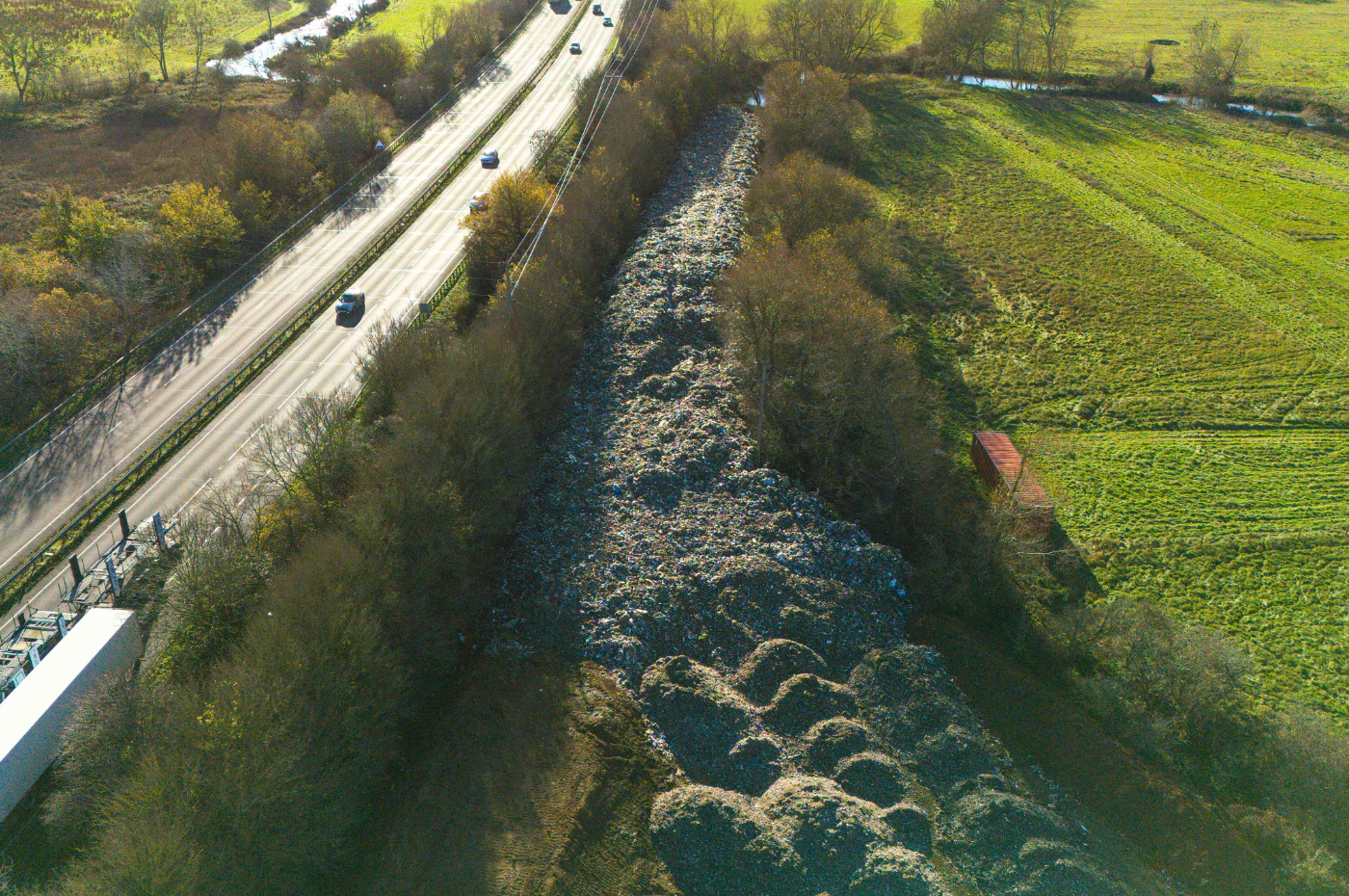
The government has today (20 March) published its Waste Crime Action Plan, promising a tougher approach to the epidemic of illegal waste dumping and fly tipping that blights towns, countryside and rural communities. The plan, spearheaded by the Department for Environment, Food and Rural Affairs (Defra) and the Environment Agency, adopts a zero tolerance stance on waste crime, with measures aimed at preventing offences at the source, strengthening enforcement and remediating the worst illegal sites.
Under the new strategy, offenders could be ordered to complete up to 20 hours of unpaid work clearing the waste they have illegally dumped - part of so called “clean up squads” - and be required to repay the full cost of site clear ups. Local authorities will also be supported with new tools, including powers to seize assets and enhanced powers for enforcement officers. The Environment Agency is set to receive an additional £45 million in enforcement funding over the next three years. The government says this will allow the regulator to intervene earlier and more effectively at illegal sites.
Countryside Alliance response
The Countryside Alliance acknowledges this Action Plan as a welcome step towards tackling a crime that disproportionately affects rural and peri urban communities. But serious concerns remain about whether the measures go far enough to address the scale of the problem and the entrenched nature of organised waste crime.
Sarah Lee, Policy Director at the Countryside Alliance, stated:
“Fly tipping and illegal waste sites are devastating rural communities. This plan makes noises about tougher enforcement, but after years of under resourcing and weak enforcement, the real question is, does it go far enough to change behaviour and truly deter criminal gangs?
“Millions of tonnes of waste are handled illegally each year, harming wildlife, polluting land and water and costing millions to clear up. Rural communities are still being left to deal with the fallout while organised crime sees waste disposal as low risk, high reward”.
The Alliance also echoes concerns raised by the House of Lords Environment and Climate Change Committee, which in a late 2025 report found that waste crime has been “critically under prioritised” and called for more effective enforcement and an independent review of current approaches.
Sarah Lee commented:
“Funding uplifts and new powers are positive, but unless this plan is backed by sustained investment, proper coordination between the Environment Agency, police and HMRC, and an emphasis on stopping offences before they occur, it risks being another announcement that fails to deliver real impact on the ground.
“People across the countryside want to see criminals stopped before sites get out of control, not just cleaned up afterwards.”
The plan also promises direct action on some of the worst illegal waste dumps across the country, with government funding for site remediation in places such as Wigan, Sheffield and Lancashire, where tens of thousands of tonnes of waste have been dumped. Measures will be backed by heightened regulatory action, including tougher enforcement powers and intelligence led operations.
Waste crime is a serious problem for communities and the environment. It is estimated to cost the English economy around £1 billion annually, with roughly 20 % of waste illegally managed and involves sophisticated criminal networks that exploit regulatory gaps to profit from unlawful dumping.
What needs to happen next
The Countryside Alliance is calling for:
• Long term, properly funded enforcement to ensure waste crimes are detected and prosecuted.
• Stronger intelligence sharing between regulators, police and HMRC to target organised crime networks.
• Support for rural landowners and businesses facing significant clean up costs and environmental damage.
• Easier reporting mechanisms so waste crime is logged and acted upon promptly.
Fly tipping and illegal waste dumping remain a blight on communities, threatening public health, damaging ecosystems and costing taxpayers dearly. This Action Plan is a start, but rural voices say more decisive action is urgently needed.
Fly-tipping and waste crime are a growing blight on the countryside and the Countryside Alliance is urging those affected to share their experiences through our Rural Crime Campaign and interactive crime map. By reporting incidents in your area, you can help expose the true scale of the problem, highlight the impact on rural communities, and strengthen the case for tougher enforcement and lasting action.

 20 March, 2026